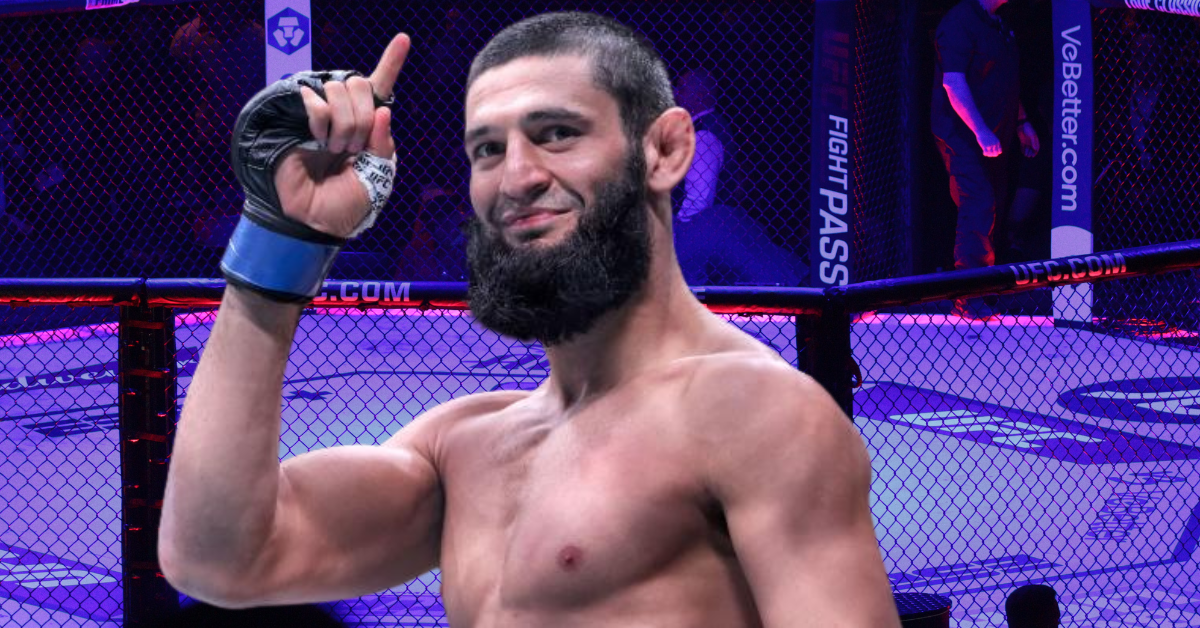
Arman Tsarukyan got skipped for a title shot he earned. Now he is everywhere. The streaming circuit, grappling events, cooking shows, he is building a brand while the UFC decides what to do with him. This is not a choice anymore. It is the cost of doing business in the modern UFC.
The numbers tell the story. Tsarukyan beat Dan Hooker in November 2025. He held the number one contender spot. The UFC gave the interim title fight to Justin Gaethje versus Paddy Pimblett for UFC 324 on January 24. The official reason involved Tsarukyan’s past actions, the UFC 311 withdrawal, the Hooker headbutt, the fan incident at UFC 300. Dana White invests in promotional campaigns, and when fighters bail, Dana does not forget.
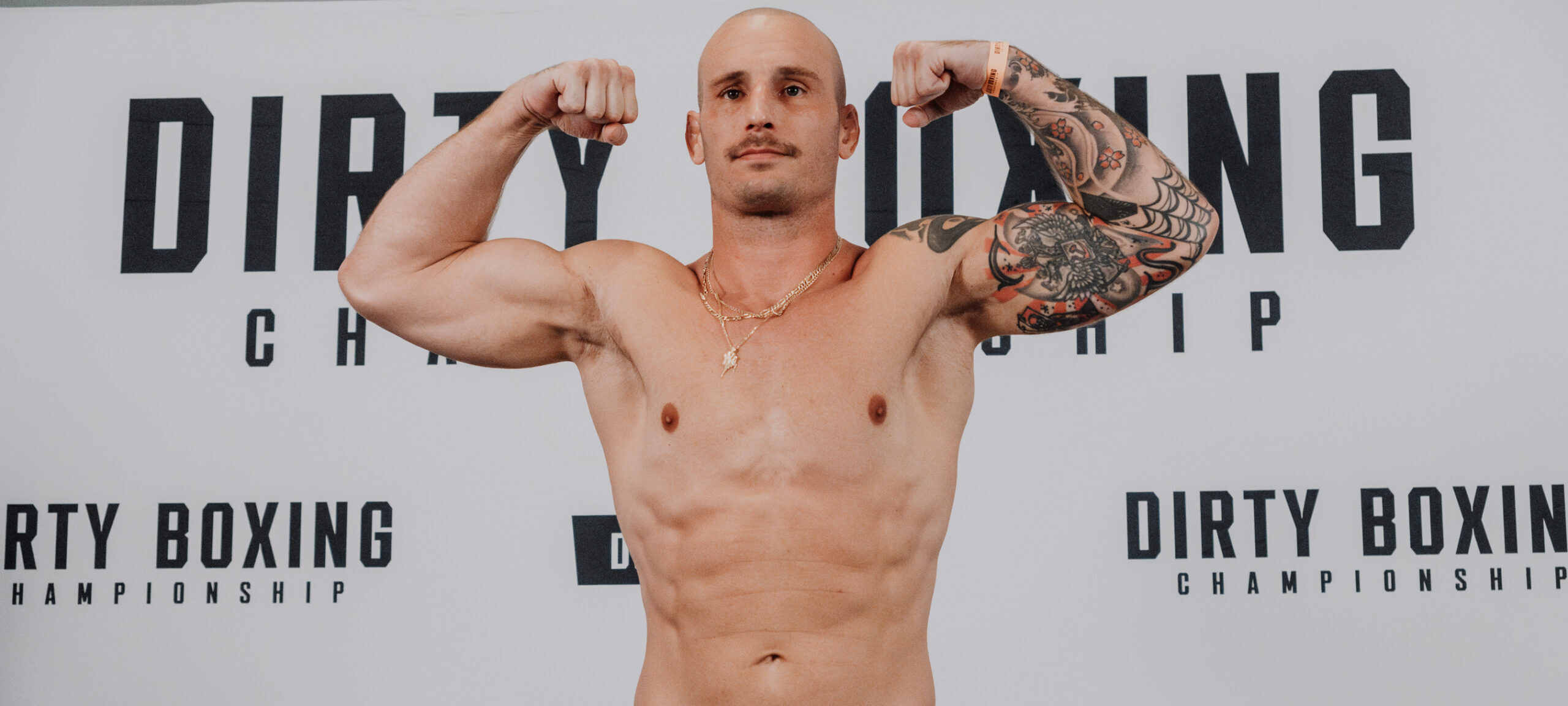
Arman Tsarukyan’s Media Tour
Tsarukyan pivoted. He appeared on Adin Ross‘s stream with MMA Guru on January 10, 2026, hanging out for nearly ten hours with fans. He joined Matan Even‘s show, where a co-host named “Mike Mike” added to the chaos. When Matan pushed buttons, Tsarukyan threatened to slap him.
Then came the cooking. On January 18, Tsarukyan made a chopped cheese sandwich in Brooklyn, the “Ocky Way“. This is not traditional fighter behavior. Food influencers reach audiences that MMA never touches. Tsarukyan knows he needs those eyes.
Tsarukyan’s Grappling
The grappling matches keep him sharp and in the news. He submitted Mehdi Baydulaev at ACBJJ 20 in December 2025. He fought Sharabutdin Magomedov to a draw at Hype FC. He dominated Lance Palmer 10-0 in a wrestling match at RAF 5 on January 10, 2026. These events do not pay UFC money. They pay in relevance.
The New UFC
Ariel Helwani called it. On his show, Helwani said Tsarukyan is “becoming the second most popular lightweight in the world behind Ilia”. Helwani pointed out that Dana White follows this stuff closely. The UFC tracks engagement metrics. A viral clip matters more than a win sometimes.
The promotion’s Paramount+ partnership factors in. The UFC needs Western market appeal for its broadcast debut. Paddy Pimblett brings a built-in audience. Tsarukyan’s wrestling wins, while impressive, stay inside the hardcore bubble. The UFC wants mainstream. Mainstream means memes, streams, and chopped cheese videos.
Justin Gaethje understood the situation. He admitted Tsarukyan deserved the shot but recognized the UFC’s stance. Gaethje cited the same incidents White did, the withdrawal, the headbutt, the fan fight. These moments cost Tsarukyan trust.
But this is the new model. Fighters cannot just train and win, that’s just not enough for the UFC anymore. They must create content, build followings, and stay visible across platforms. The UFC has shifted from a sports organization to an entertainment company that happens to feature fighting. Rankings matter, but algorithms matter more.
Swedish MMA fighter Samuel Bark enters his featherweight bout against Mate Sanikidze at Oktagon 79 with clear intentions: a convincing performance that positions him for a title shot while allowing him to showcase the Muay Thai techniques that define his fighting approach.
Samuel Bark Plans Pressure and Power at Oktagon 79, Eyes Title Shot After Sanikidze Test
Bark carries a 12-2 record into the contest, sitting at number six in the Oktagon featherweight rankings. The matchup takes place November 1st at Winning Group Arena in Brno, Czech Republic, forming part of the promotion’s milestone 1,000th fight celebration.
Bark’s fighting background provides context for his competitive approach. The Swedish fighter spent years competing in Thailand’s professional Muay Thai circuit, accumulating over 70 fights before transitioning to MMA. He earned the nickname “Sammon Decker” from his coach Sangtiennoi, who had a trilogy against legendary Dutch striker Ramon Dekker.
After establishing himself domestically in Sweden through multiple promotions, Bark moved into broader European competition with Cage Warriors and UAE Warriors, where he defeated former UFC fighter Ali Al Qaisi to capture the UAE Warriors featherweight title in May 2024.
Following his May 2024 championship victory in Abu Dhabi, Bark returned to action at Allstars Fight Night 10 in June 2025, competing for the AFN belt against Danish fighter Frederik Strauss. The competitive landscape at featherweight in Oktagon remains unsettled, with the champion position currently vacant as of October 2025. Victories against ranked opponents like Sanikidze would solidify Bark’s standing among the division’s elite and strengthen his case for a title fight.
On his fighting philosophy against Sanikidze, Bark stated his intent clearly, in an exclusive interview with Tim Wheaton of MMA News, he said:
“I want to display some Muay Thai, you know how they walk their opponent down with pressure. So like a lot of pressure, a lot of power. Punches, kicks, knees, elbows. I’m not sure. It depends on how much he walks back and runs away, you know.”
Bark’s professional activity level has been notable throughout his MMA career. Between December 2021 and May 2024, he accumulated 10 professional bouts while working to develop his striking-based approach within the MMA ruleset.
The Oktagon 79 event itself carries significance beyond this individual featherweight matchup. The show features reigning welterweight champion Ion Surdu defending his title against Andrej Kalašnik in the main event.
For Bark, victory on November 1st would represent another step toward his stated objectives of securing a title shot within Oktagon. His ability to implement his pressure-based Muay Thai game plan against Sanikidze will determine whether he achieves the statement victory he seeks.
UFC President Dana White delivered a controversial response to the eye poke incident that ended UFC 321’s main event, telling reporters “Who gives a s–? What are you going to do?” when asked about the organization’s longstanding eye poke problem.
The highly anticipated heavyweight title defense between champion Tom Aspinall and challenger Ciryl Gane came to an abrupt halt at 4:35 of the first round when Gane accidentally poked both of Aspinall’s eyes. Unable to see properly after the incident, Aspinall could not continue, leading referee Jason Herzog to declare the bout a no-contest.
”I just got poked knuckle deep in the eyeball. What am I supposed to do about it? I can’t see,” Aspinall said in the octagon while addressing the booing crowd. The champion was immediately taken to the hospital following the incident.
During the post-fight press conference, White appeared unsympathetic to both the situation and calls for reform. When pressed about potential solutions to prevent eye pokes, he responded: “Who the f– knows? Who gives a s–? What are you going to do? Just happens. Yeah. I mean, no matter what you do with the glove, I mean, they’re going to happen.”
White’s comments drew criticism from fans and media members who viewed his response as dismissive of fighter safety concerns. The UFC president also made controversial remarks suggesting Aspinall may have chosen not to continue, stating “Only Tom knows what happened. Could he see? Couldn’t he see? Could he continue? Only he knows that.”
The Persistent UFC Eye Poke Problem
Eye pokes have plagued the UFC for years, with research showing the organization has a significantly higher rate of incidents compared to other promotions. A 2022 study by the Association of Ringside Physicians found the UFC’s eye poke rate was 23 incidents in 233 bouts, translating to one eye poke per ten fights. This rate was dramatically higher than Bellator’s rate of 2 incidents in 87 bouts, or one in every 44 fights.
The UFC has had seven fights end in a no-contest due to eye pokes since 2005. Between 2001 and 2020, Nevada State Athletic Commission data showed 369 eye injuries occurred across 2,208 professional MMA fights, with 73 percent of events reporting at least one eye injury.
Notable fighters like Jon Jones have faced repeated accusations of eye poking throughout their careers. Analysis shows Jones has committed at least 33 genuine eye pokes across his UFC career, with 58 instances of fingers in opponents’ eyes. Despite this history, Jones has never received a point deduction specifically for eye pokes.
Photo By Tim Wheaton
Failed Solutions and Glove Design Issues
The current UFC glove design has been identified as a contributing factor to the eye poke problem. The gloves naturally extend fighters’ fingers outward, increasing the likelihood of accidental contact with opponents’ eyes.
MMA coach Trevor Wittman developed alternative glove designs through his ONX Sports company that curve fighters’ fingers inward to promote a natural fist position, potentially reducing eye poke incidents. The gloves received widespread praise from fighters and commentators like Joe Rogan, who called them “absolutely superior.”
However, negotiations between Wittman and the UFC broke down when the organization demanded exclusive ownership of the patent. Wittman refused to sell the rights to his design, creating an impasse that has prevented implementation of the improved gloves.
In 2024 the uFC introduced a new glove design to help lower eye pokes in the sport. However, the organization later threw away the gloves and reverted to the original design. The reasons are still unclear.
Impact on Fighter Safety and Careers
Eye poke incidents can have severe consequences for fighters. Research shows 57 fighters who sustained eye injuries were recommended for further ophthalmology clearance, with 43 receiving no-contact recommendations ranging from three to five weeks. More serious injuries like retinal damage require longer recovery periods.
In the UFC 321 incident, Aspinall suffered what he described as being “poked knuckle deep” in both eyes. Medical examination revealed both eyes were affected, with his right eye bearing the worst damage. The champion shared images on social media showing the extent of the injury aftermath.
White confirmed that Aspinall and Gane will have an immediate rematch, despite the controversial ending. “Total pain in the a** but yeah,” White said regarding rebooking the fight. The rematch announcement came unusually quickly, as White typically avoids booking fights at post-event press conferences.
Movement Martials is a combat sports account you should follow if you want to learn how to watch combat sports or even improve as an athlete.
Movement Martials is a brand account run by two pseudonyms. “Thick”, the strength and conditioning guru and “Kick”, the fight analyst.
I myself have done multiple podcasts with Kick where we discuss the intricacies of a single matchup.
Kick and I previewed Charles Oliveira’s fight with Ilia Topuria here:
This is an extremely underrated account that provides in depth analysis on combat sports as well as detailed strength and conditioning programs. In an era where rage bait content is generated for clicks, Movement Martials stands out to improve your consumption of combat sports content.
THE PACKAGE
Contained Chaos: Oliveira vs. Chandler Preview
Charles Oliveira is an offensive dynamo. From his kicks to clinch striking to submission game, Oliveira is in possession of every finishing weapon The problem is that he has not always chosen the right weapon for every encounter. Take the finishing sequence of his title loss to Makhachev. Oliveira enters from long to mid-range with a flying knee while Makhachev has all the space in the world behind him to retreat. He catches Makhachev primed to counter while he is still recovering his stance, leading to the knockdown. He has a lovely knee, but this was one of the worst times he could have thrown it, there was nothing to set this up or indicate its utility.
Redemption: How Charles Oliveira Splattered Beneil Dariush
The opponent’s lead hand is often in the way of the left hook, and the same is true for the jab that sets up his rear straight. The right high kick can cause significant damage (unlike most open-side right body kicks: no liver) and has a significant impact even through a guard.
The same way Edwards knocked Usman out and the strike Robert Whittaker hits on everyone, the 1-2 is something of a throwaway shot. If something hits, great, but the real object of the rear straight is to get the opponent to anticipate punches and dip out to avoid the strikes. Even better if they try and parry the 2 which lowers their guard. They avoid a flush punch but invite a shin to the dome. Though it is one of the most classic combinations in kickboxing, same-side punch and kick combinations remain a brilliant strategy to play with opponent’s expectations.
Preview from Movement Martials Substack
The full article can be found here:
Redemption: How Charles Oliveira Splattered Beneil Dariush by Movement Martials
Collar Ties are emblematic of MMA. A tool utilized for transitional offense, control, and defense: they are versatile. Just a hand upon the neck and a forearm in the opponent’s shoulder is integral to controlling the standing grappling of a fight rather than allowing yourself to get man handled by a larger grappler. Fight fans have long heard the story of when Anderson Silva forged his UFC star-making performance by brutalizing Rich Franklin with the double collar tie.
Oliveira employs the concept of pushing and pulling here as well. Oliveira pins Poirer agains the cage and pulls him into a hard knee to then post off the head to create space and throw an elbow in the open space.
Grappling Highlights from UFC 296 With a Dash of Charles Oliveira
Charles Oliveira was able to do this much more impressively against a slightly less worn version of Tony Ferguson without getting hurt by him in the process. Instead of diving on the single in an all-or-nothing attempt Oliveira cinches up the body lock in order to drive Ferguson to the cage. These moments along the cage give Oliveira time to adjust his grips and shove his knee under Ferguson’s shin.
With his body lock tightened and knee holding up Ferguson’s leg, he lifts Ferguson up and slams him down. Notably utilizing the body lock rather than single leg puts Oliveira into a more advantageous position while on top.
Preview from Movement Martials Substack
Full article can be found here:
Controlling the Scramble Grappler: UFC 296 by Movement Martials
Grappling Highlights from UFC 296 With a Dash of Charles Oliveira
Make sure you also check out Movement Martials mini trailer of Charles Oliveira’s Improved Wrestling
Movement Martials provides unique technical insights in all his articles. All of his articles have helped me improve my own analytical skills and I am positive that they will do the same for you.
Subscribing to Movement Martials is a step in the right direction to being a knowledgeable combat sports fan. The sport is a lot more enjoyable when you understand what’s going on. You won’t regret it.
Tyler Goodjohn will have his last dance in Leeds this weekend and also sees Paulie Malignaggi bowing out from competing in combat sports as well. Tyler Goodjohn will battle Paulie Malignaggi at BKB 47: Leeds Brawl 2 on October 18th. Tyler Goodjohn appeared on Bare Knuckle Bowker to touch on his highly hyped retirement bout as the former BKB champion and BKFC title challenger throws down with the multi-time gloved boxing champ, Malignaggi.
When touching on the dual pronged meaning of his social media post that referred to this intriguing headliner being the last dance in Leeds, Tyler Goodjohn said [via Bare Knuckle Bowker],
“I mean look, it was always going to be my last fight, you know. I’m bowing out and it’s going to be Paulie’s last fight as well. I mean look, he signed a three fight deal but, you know, he’s not getting past the first fight. So it’s going to be retirement. It’s going to be a retirement do for both of us, you know. It’s probably never happened before where both are going to retire on the same night. Yeah, he’s definitely not going to want to carry on with the bare knuckle journey after this fight.”
“And I’m done. I’ve got nothing else to prove. You know, I’m a pioneer in this game. I think slowly people are starting to see it now. I opened the door for everyone. I went to America. I’ve done all the madness, you know, the COVID stuff. I’m starting to get my respect now.”
“It’s not often I can get into a room or a street and people don’t recognize now. So, you know, this fight against Paulie; As Paulie said when we had the face off, he wants to give me the exposure. I’ve not had the exposure that I really should have had in my career. So, yeah, it’s a nice one to bow out on.”
When addressing the pieces of fighting a former IBF junior welterweight and WBA welterweight champion in terms of how further delving into how much this is an ideal fight to bow out on, Tyler Goodjohn stated [via Bare Knuckle Bowker],
“There wasn’t a fight as a, you know, boxer that I missed. Paulie, I was a big fan of Paulie, you know. The fight; you know, boxing fans will remember the night he fought Miguel Cotto with a broken jaw or a cheekbone or whatever it was. Like the guy is very, very tough. The guy is very, very good and I actually just put a picture of his resume out and like he’s fought everyone, man.”
“Everyone, like and I salute that, you know, because that’s how I like to be in my career. Like that’s; you know, he’s obviously been a two-weight world champion, but he’s had a lot of lows. He’s lost a lot of fights, you know, but he’s always come back and fought the best. So you really, you know; you really have to take your hat off to people like that [laughs].”
Tyler Goodjohn, the multiple levels of BKB related closure here, and his retirement aims
The former BKB champion previously left the promotion on bad terms as he pursued opportunities with BKFC. Upon returning to an ever growing BKB fold, Goodjohn has since made amends with promotional figureheads Jim Freeman and Joe Brown after having some cross words from the prior regime. When touching on how this final prizefight for him seems like it’s creating closure in a multitude of regards, Tyler Goodjohn quipped [via Bare Knuckle Bowker],
“Yeah, definitely. You know, Jim [Freeman] and Joe [Brown] have been really good. They’ve stuck to everything they’ve said, you know, they’ve been really good. I can’t; no complaints at all. Then obviously, to give me this fight, the exposure. It’s just a massive fight to go out on. It’s great. I’ve not been totally honest with people how badly like, you know, my hands and my body’s been because I want it so badly, but at 34, people have got to remember there’s a lot of life [laughs] to live after fighting. You know, this is going to be my ninth bare knuckle fight.”
“But people forget that I fought at a very high level as a professional boxer and an amateur as well. You know, I had a lot of fights. I had 69 amateur fights and I had 19 professional boxing matches and like 10 of them were; 10 of them were like title fights, you know what I mean? 10 rounds, grueling 10 round title fights. So I’ve been up and about [laughs], up and about. On top of that, all the sparring and all the stuff, you know, all the behind the scenes that no one sees.”
Tyler Goodjohn continued, “It’s, 34 years of age. Maybe I could go on another couple of years but for what? I’m not really; and truly, after this fight against Paulie, what more can I do? Like and without being too disrespectful, people go, oh, be BKB champion again, I’ve done it. I done it in a historic fight against Sean George and even the champion now at my weight.”
“Liam Rees like, good fighter, champion, all this, but like no one knows who he is, you know? So, it’s like, after this Paulie fight, I could walk away and I want to get into coaching and who knows? Look, I could bring another bare knuckle superstar along.”
“But, you know, like I say, as a 34 year old man now, let’s face it, I’m on the decline. The scar tissue on my face is a joke. So, I’m having to fight most; well, my last three fights, pretty much blind really because the blood and the scar tissue damage. Yeah [laughs], I just don’t really want it for; I’ve got this last one. I can go, you know what, all in. Let’s go. But there’s got to come a time.”
Tyler Goodjohn continued, “There’s got to come a time. And if the fighter can come up; it’s not often the fighter comes up with that. Do you know what I mean? Usually it’s someone else like trying to tell, persuade someone to retire and all that, but I feel it. I felt it in training for this fight. I mean I’ve had a lot going on in my personal life, a lot, lots. I’m very proud of myself how I’ve just got on with it.”
“But I’ve not been enjoying it. The discipline side of me is incredible and everything gets done impeccably. Do you know what I mean? Like to the max. But I’m just not loving it. I just, I haven’t got the love for it anymore. You know, it hurts [laughs]. Training hurts. What people forget is as well as a professional, we’re not training to keep fit and and training at 70%. We’re there, you know, I can only speak for myself, but I imagine most professional combat sportsmen, when you go into training, you’re giving 110% every time.”
Tyler Goodjohn continued, “I’m training twice a day, six days a week. People will be like, I’m my own worst enemy when I should take rest and everything else. But you know, when I’m switched on to a fight, man, I’m locked in. It’s an obsession. Again, I think most other fights was; fighters will say the exact same thing. It’s an obsession.”
“So yeah, the last 16 weeks have been hard with everything that’s going on outside in my life and, you know, in the mix of that, I’m also fighting a guy who’s a former two-weight world champion. So discipline, man. Super disciplined.”
It’s unfortunately not uncommon for an MMA card to feature a fighter who missed weight for their bout. UFC Rio, however, presented us with a truly ridiculous case.
The opening bout of the evening saw Luan Lacerda taking on Saimon Oliveira — a fighter who missed weight by eight pounds. The bout ended up contested at 144 pounds, making it more like a featherweight contest than a bantamweight one. Oliveira also had to weigh in under a certain amount for the fight to even go on.
Lacerda won the fight anyway, avoiding the controversial idea of a fighter missing weight on purpose to get an advantage in the fight — as well as fighter pay issues in circumstances such as these. Oliveira, in fact, looked terrible and drained, and his UFC future is probably in doubt.
Photo By Tim Wheaton
But that doesn’t get us away from the debate over how weight misses in MMA should be handled. Oliveira ended up forfeiting 50 percent of his fight purse, which means he didn’t make a lot of money for this loss. Traditionally, commissions penalize MMA fighters 20-30 percent of their purse for such weight misses, so this kind of fine is a good statement.
Perhaps that could set a precedent for other potential penalties that could be “perfect” solutions for these kinds of issues.
Percentage Increase For Fines With Each Weight Miss
This idea is based off of the bigger fines for bigger weight misses in MMA — and the extreme case in the case of Oliveira from UFC Rio.
Essentially, in this scenario, a second (or later) weight miss after an initial one results in an increased set minimum of fine for the fighter that misses weight. While, as discussed, most circumstances see an MMA fighter get fined a minimum of 20 percent of their fight purse for a weight miss, a second weight miss would mean the fighter’s minimum fine gets increased to 25 percent.
Let’s use Charles Oliveira as an example. The weight miss for his 2012 bout with Cub Swanson would have resulted in the normal 20 percent purse fine. But his second weight miss, which came against Jeremy Stephens, would see a minimum of a 25 percent purse fine with this rule, and a minimum 30 percent for his weight miss against Myles Jury. That said, an extreme case — such as Oliveira’s 10-pound miss against Ricardo Lamas — could result in a percentage fine that is more than the minimum.
This rule can also apply to just a certain timespan, such as 12-18 months. In a case like this, Charles Oliveira’s weight miss against Stephens would still just be a 20 percent minimum, since it came two years after the Swanson fight. But the weight miss against Jury would see the bump up in minimum since it came a year later.
Forcing Fighters To Move Up After Two Weight Misses
If weight cutting isn’t going to go away in this sport, since MMA fighters and their teams love to have the size advantage in a fight, then perhaps we need to more strictly come down on fighters who can’t keep up on the weight cutting responsibility to maintain such advantages.
In this circumstance, a second weight miss results in the fighter being mandated to move up in weight class. There are no exceptions. Whether it’s a fighter who is fighting on the undercard, or a fighter who was nearing a title shot in a weight class, a second weight miss means their run in that division is over. They must move up in weight or they will not be permitted a license to fight.
It sounds harsh. But the intention is to fight back against the harm done to one’s body during a weight cut — and to fight back against a fighter who might willingly miss on purpose (like Yana Santos accused Macy Chiasson of doing recently). The California State Athletic Commission, in fact, has rules in place that can force fighters to move up depending on how much weight they are cutting and rehydrating to, or fight cancelations depending on the extremity of an MMA fighter’s weight miss.
But with this case, it’s not just fighters and state athletic commissions who have to take responsibility, it would also be on the promotions to be required to follow such measures.
Image: UFC/Facebook
Automatic One-Point Deduction On The Scorecards
This is perhaps the harshest of all circumstances, but I believe it is one that might be necessary to get improvements moving — and it is the one I most support.
In this circumstance, a fighter who misses weight is brought to the center of the cage right away and issued a one-point deduction immediately as the fight starts. This means that this fighter can only earn a maximum of nine points for the opening round and essentially must sweep three rounds on two judges’ scorecards to get a decision win. Losing a round would mean a fight that goes to the scorecards sees that fighter only able to earn a draw at best.
The PFL did something like this when using its regular season-playoff format. A fighter who missed weight lost one point in the standings, and that later saw a change where that fighter was unable to earn any points in the standings. There was also the controversial losing one point implementation in PFL Europe’s tournament format. Regardless of what you think of the PFL’s usage of these created ideas, I think they were getting somewhere with how hard you need to come down on fighters for this circumstance.
Making weight is a matter of professionalism. And if we can’t get rid of it in MMA, then we have to come down harshly on it for the respect of those fighters who are responsible with their weight cutting and for those MMA fighters who hold making weight in necessary regard.
Who knows if any of these ideas actually get implemented in the future? But hopefully we as an MMA community can discuss these ideas to bring about necessary change for the sake of the fighters and the sport as a whole.
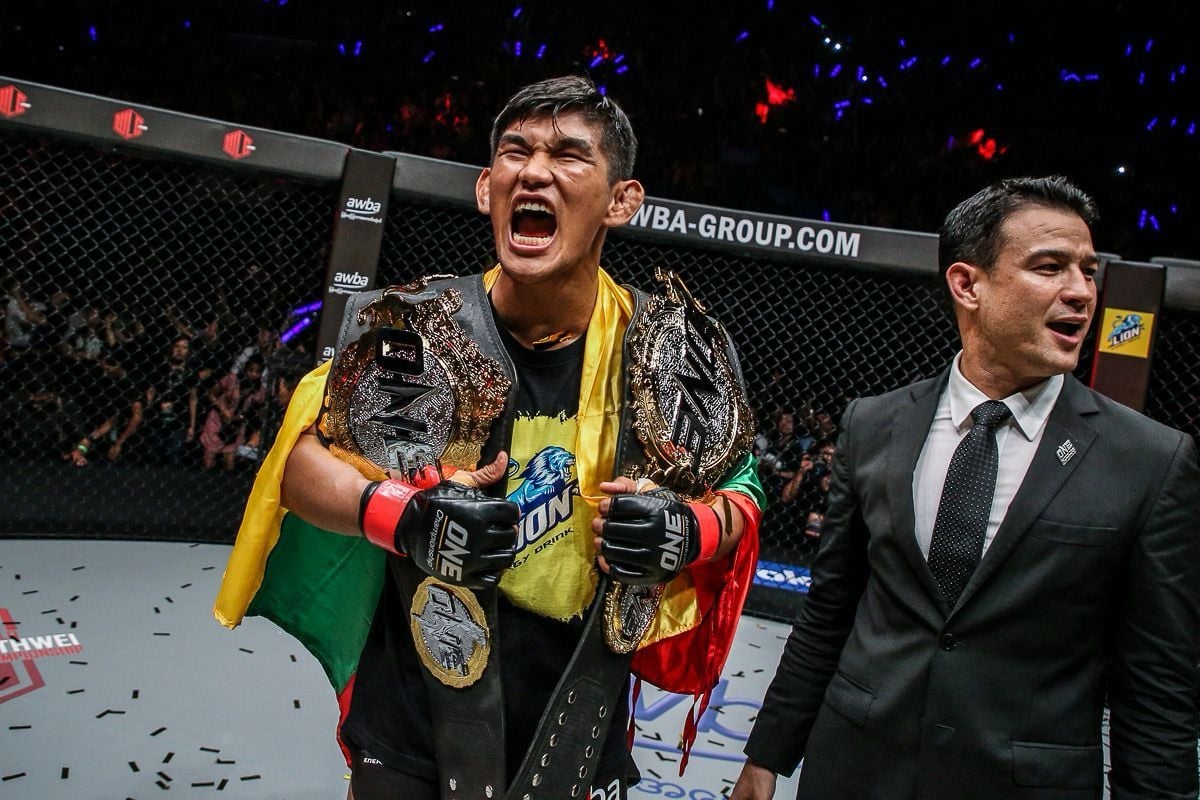
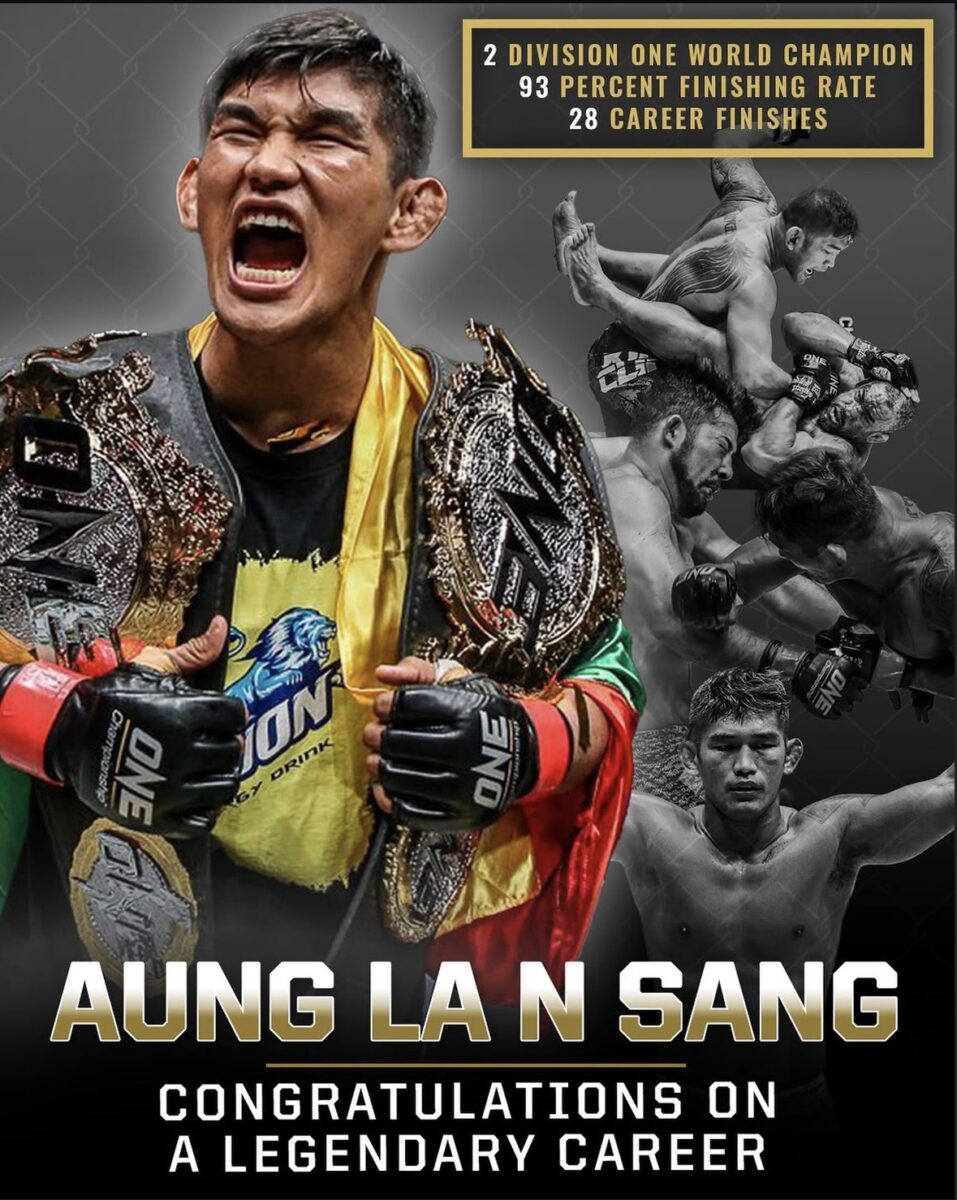
This past weekend in Bangkok, Thailand, Burmese MMA legend Aung La N Sang made his walk to the ring for the final time. Led by Burmese Rock legend Lay Phyu singing a live rendition of N Sang’s legendary walkout song, the entire crowd was behind the ONE championship star. The energy was high, but a certain level of nerves and tension remained. Waiting in the ring was Swedish powerhouse Sebastian Kadestam, riding a three fight win streak which included a knockout of the world renowned Roberto Soldic. Aung La N Sang on the other hand, was coming off two fights with Shamil Ergodan in which he suffered a loss in both.
With the ‘Burmese Python’ announcing his retirement prior to the bout, many worried that with one foot out the door N Sang may lay down his gloves following a third straight loss.
That would not be the case.
After a tentative first round, both N Sang and Kadestam began to turn up the heat. Exchanges in the pocket quickly turned bloody and dirty, with the Swede consistently backing up at the power of N Sang’s strikes. After eating a spinning elbow halfway through the round, Aung marched forward firing a barrage of hooks and uppercuts, sitting Kadestam down in the corner of the ring. The crowd went wild, as Aung La N Sang did what so many fighters fail to do: Retire on a win.
After an up and down start to Aung La N Sang’s career, not many would have guessed he would become one of the greatest fighters in ONE Championship history. Born in Myanmar, he moved to the United States at a young age. He began his professional MMA career in 2005, fighting primarily in promotions on the East Coast. He faced future UFC fighters such as Uriah Hall and Costas Philippou. He found mixed success, racking up a record of 15-9 fighting in the United States fighting for promotions such as Bellator, CFFC, and Ring Of Combat.
ONE Championship began aggressively expanding their MMA roster around 2014, searching for Asian fighters across the globe regardless of their country of residence. Aung La N Sang was one of the fighters signed, along with athletes such as Lowen Tynanes, Martin Nguyen, and the Lee Family. This was where it all changed for the Myanmar native.
Aung La N Sang proceeded to win four fights in a row, earning a title shot against Vitaly Bigdash at ONE: Quest for Power in Jakarta, Indonesia in 2017. Despite a spirited effort, N Sang fell short in his title attempt and lost the unanimous decision to Bigdash. He was given another opportunity to win the title just 6 months later, and this time flipped the script, defeating the champion Bigdash by unanimous decision, securing the first belt of his career and avenging his first loss in the promotion.
Image credit: @aunglansang on Instagram
Following these two fights with Bigdash, Aung La N Sang put together one of the most impressive runs in promotional history. He finished six consecutive opponents, while securing and defending two different belts in the process.
N Sang became the first double champion in ONE history, cementing his status as a legend in Asian MMA. Following this incredible run, he would lose three out of four, including his trilogy bout with Bigdash and two fights to current UFC contender Reinier De Ridder.
Aung La N Sang has been a long term member of Kill Cliff FC in Deerfield Beach, Florida. Beloved amongst the gym and its members, Henry Hooft could be seen in N Sang’s corner at nearly all his fights. The same could be said for N Sang himself, who supports and corners countless fighters including Marc Andre Barriault, Linton Vassell, and even his former opponent Reinier De Ridder.
Aung La N Sang Cornering Reinier De Ridder – image credit @aunglansang on Instagram
Aung La N Sang had a long career prior to ONE, meaning by the time his stretch of dominance ended, he was in his late 30’s with plenty of mileage on the body. The Burmese Python defeated Yushin Okami, Gilberto Galvao, and Rong Fan before getting finished twice by Turkish powerhouse Shamil Erdogan. Following his 28-second loss, N Sang announced his next fight would be his last.
With history not on his side, and an opponent six years younger than him, Aung La N Sang delivered perhaps the moment of his career, finishing Kadestam while his father cheered ringside. He was able to make the trip from Myanmar to Thailand for his son’s final fight and witness this incredible moment.
The pride of a nation, Aung La N Sang will forever be remembered as the first Burmese Mixed Martial Artist to make an impact on the world stage, and can be proud that he rides of into the sunset with a victory in his final bout and a seat in the ONE hall of fame waiting for him.
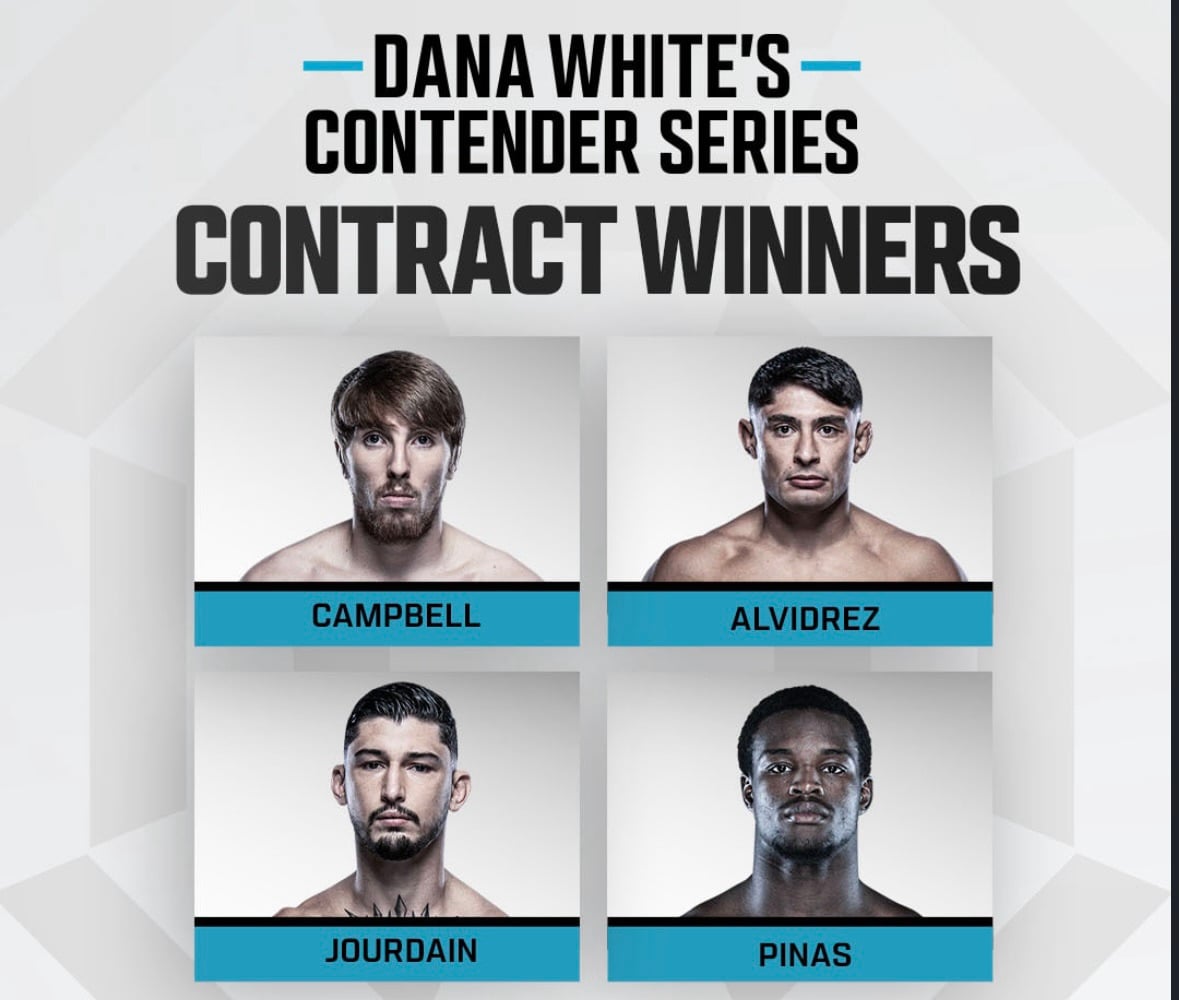
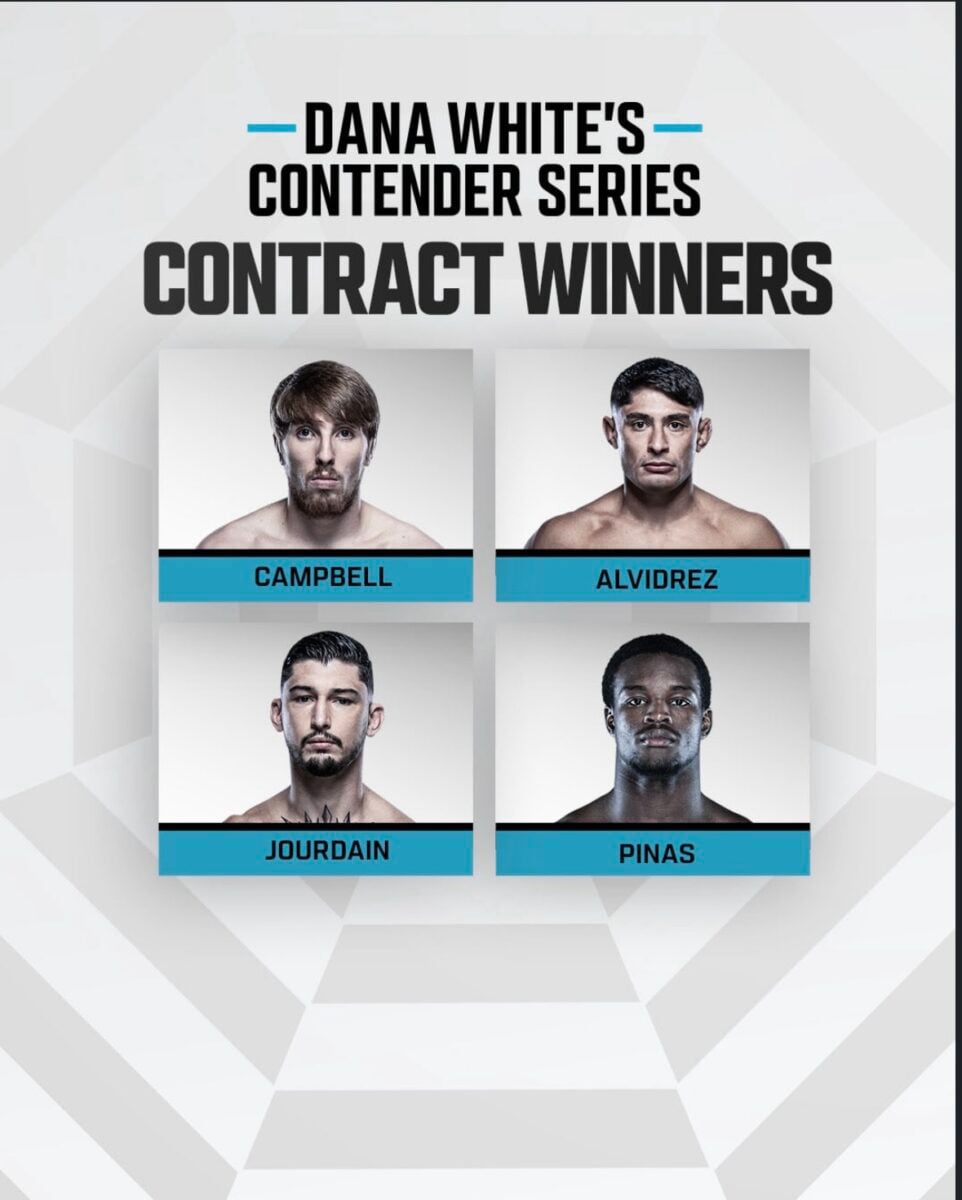
DWCS rolled on with Episode 8 of Season 9 on Tuesday, September 30th. Five fights took place at the UFC Apex, with four of the winners walking away with UFC contracts. The UFC will officially be adding the following fighters to the UFC roster:
Kurtis “Pink Panther” Campbell – 8-0 Featherweight
Louis “Mad Prince” Jourdain – 9-3 Bantamweight (brother of current UFC fighter Charles Jourdain)
Chris “The Newborn” Alvidrez – 7-1 Welterweight
Damian “Baba Yaga” Pinas – 8-1 Middleweight
All four of these fighters secured their victory via finish, proving this week’s roster is ready for the big show. Although winning on the contender series is the first step, we will be looking forward and predicting some potential matchups that could fit well for these fighters UFC debuts.
Kurtis “The Pink Panther” Campbell– 8-1 Featherweight
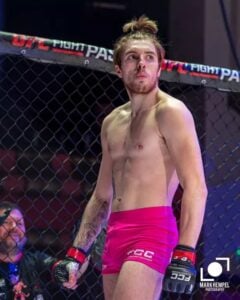
Kurtis “The Pink Panther” Campbell secured perhaps the most viral finish of the evening, annihilating his opponent Demba Seck with massive elbows from top position. Following his performance, Campbell walked out of the cage to The Pink Panther theme, showing that the UFC brass is already getting behind the 23 year old scouser.
Kurtis Campbell is an excellent prospect, very similar to Paddy Pimblett in his size and skill set. The Liverpool native is a former champion of England’s FCC promotion, and has a variety of finishes on his record. Long kicks, powerful punches, and an awkward yet effectively wrestling game make up his primary skillset on the feet, but where he is truly dangerous is in on the ground. When Campbell gets top position, he is brutal with his ground and pound and showcased in his contender series bout.
This fight was quick work, and there is no doubt Campbell will be looking for fast turnaround for his first fight in the big show. He seems to be on UFC matchmakers good side thus far, so I anticipate a favorable matchup for Campbell’s UFC debut.
Prediction: Kurtis Campbell (8-0) vs Francis Marshall (8-3) – December 2025/January 2026
Louis “Mad Prince” Jourdain – 9-3 Bantamweight
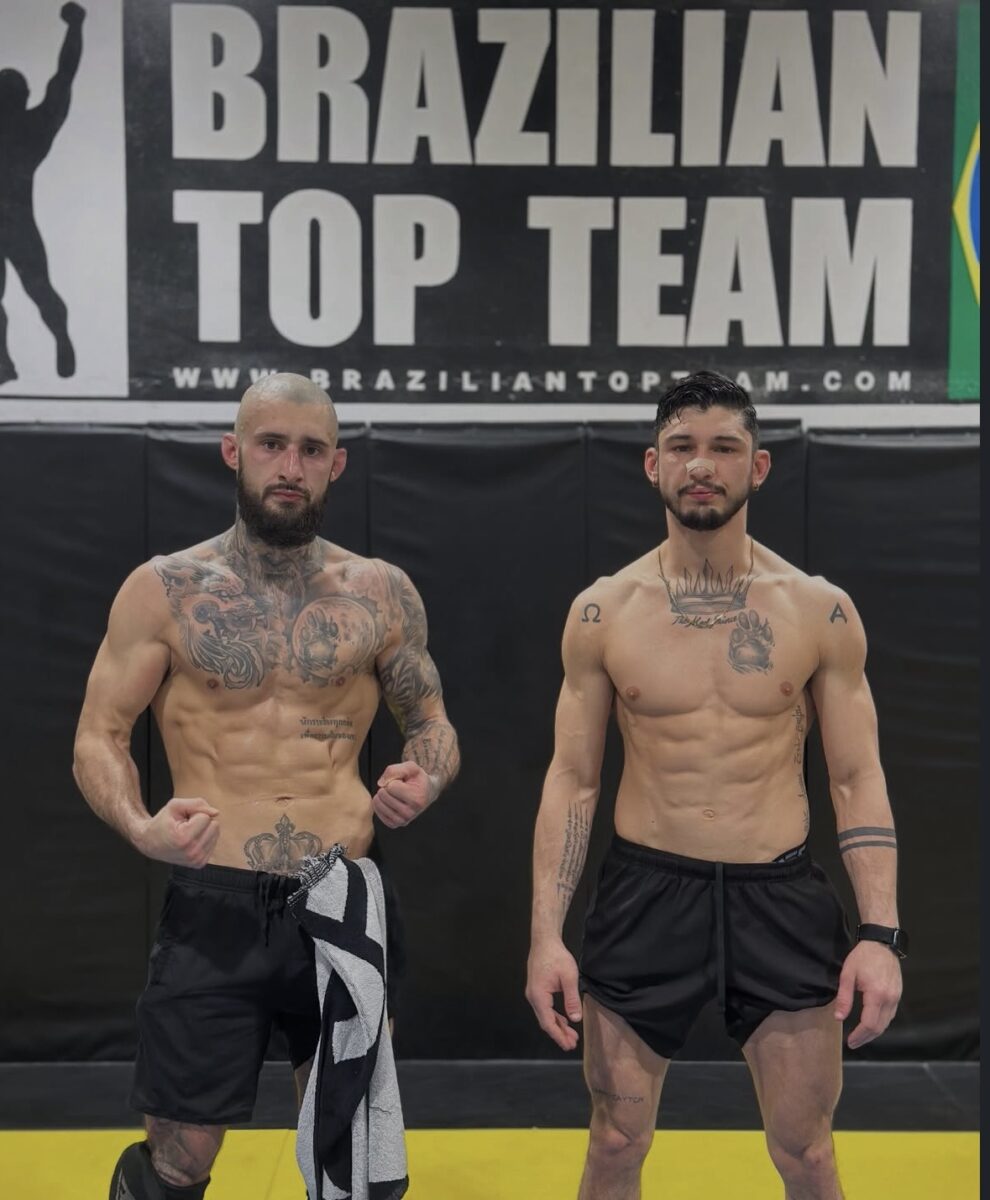
Louis Jourdain had the cleanest and most well rounded performance of the evening. The Canadian bantamweight and younger brother of UFC fighter Charles Jourdain, showcased all of his skills en route to a third round submission of Magno Dias. Jourdain utilizing his lead hand, calf kicks, and excellent grappling game to dominate all phases of the fight. A Jiu Jitsu brown belt with four pro boxing matches, Jourdain is about as well rounded as they come. Not only did he secure a contract, but he also made history as Charles and Louis became the first Canadian siblings in UFC history to be on the roster.
Louis Jourdain’s biggest setbacks have not been losses inside the cage, but rather injuries and lost time. Now that he is back in the metaphorical saddle, there is no doubt he knows the time is now for his career. On the broadcast, he could be seen pleading with Dana White to book him for UFC Vancouver (despite the fact Dana White hasn’t booked a single fight for the UFC in years, that’s all Sean Shelby and Mick Maynard). While it would be a quick turnaround in just two weeks, we can certainly hope the UFC honors his wishes and allows him to share a card with his brother.
Prediction: Louis Jourdain (9-3) vs Kris Moutinho (14-7) – UFC Vancouver – October 18th
Christopher “The Newborn” Alvidrez – 7-1 Welterweight
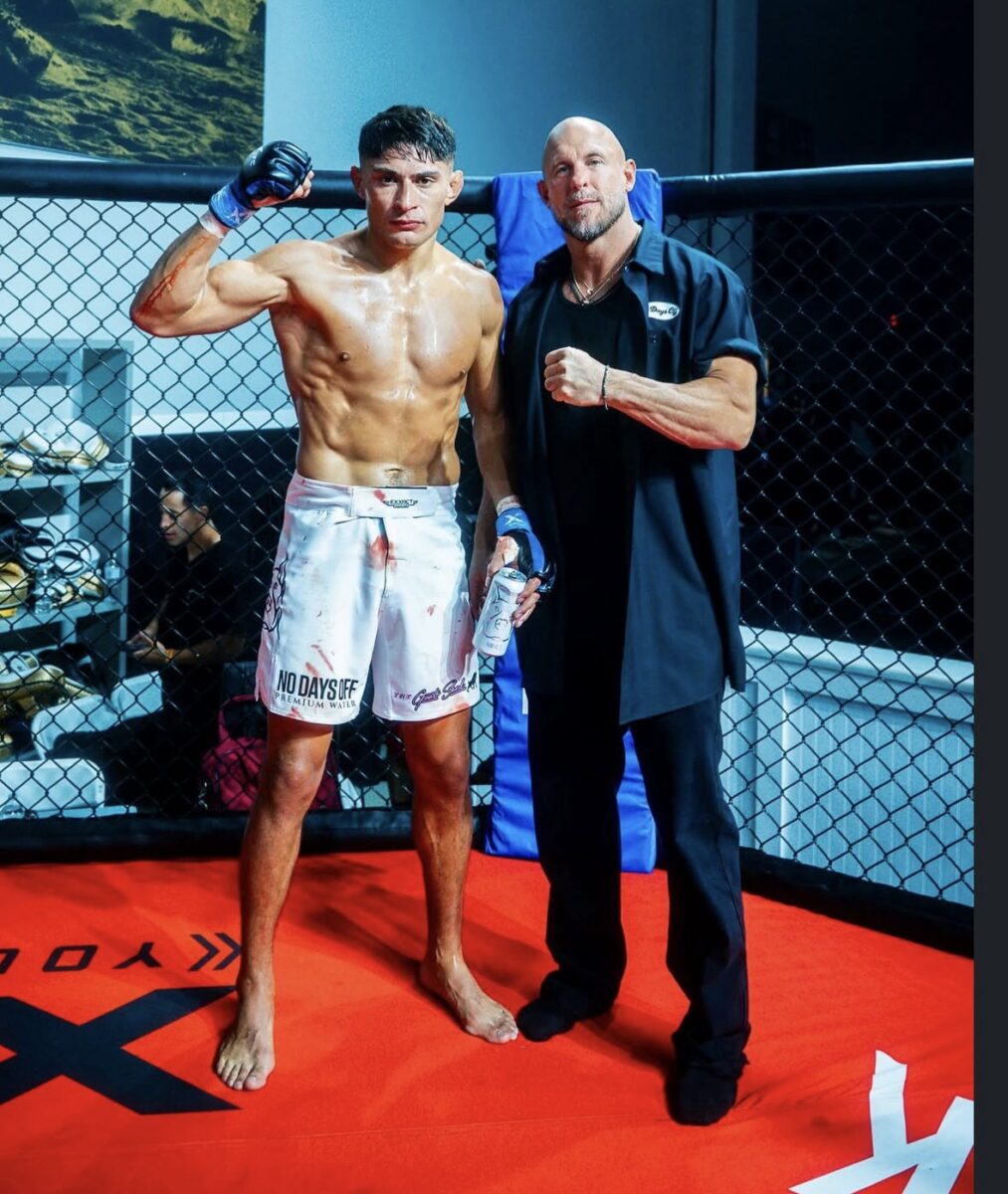
The only betting underdog of the evening to win his fight, Christopher Avidrez showed excellent heart and desire in his fight, knocking out the unorthodox Eliezer Kubanza in the first round. A former football player who turned his life around through MMA, Alvidrez has overcome a lot to make it to this moment. He relocated to Miami after a brutal car accident ended his football career, and fully committed himself to combat sports while training at The GoatShed.
Alvidrez is the least polished of all the winners of this episode. His toughness and strength are no question, and he utilized outstanding elbows in the clinch, he still has questions that need to be answered in terms of his overall game. We could see Alvidrez being thrown into a tough matchup right away, but his mentality won’t stop him from taking a challenge head on. It should also be noted he was seen with a large wrap around his right knee, so it could be some time before we see him make his debut.
Prediction: Christopher Alvidrez (7-1) vs Daniil Donchenko (12-2) – February 2026
Damian “Baba Yaga” Pinas – 8-1 Middleweight
In the main event of the evening, Damian Pinas made quick work of his opponent, flatlining Vitor Costa with a brutal right hand in the first round. This contract was long overdue, as Pinas was scheduled to be on episode one of this season, but due to visa issues was not able to travel for the fight. Luckily he was rebooked, and now can look forward to being booked in the UFC.
Pinas is a fantastic kickboxer with excellent power in his hands and feet. He will become the second Surinamese fighter in UFC history, following Jair Rozenstruik. Similar to Bigi Boy, Baba Yaga has the kickboxing skill and power to dispatch anyone inside the cage. Now that the visa issues are fully cleared, we can hope to see the young fighter pick up another fight soon. At just 23 years old, time is on Pinas’ side, but it would be advantageous to keep his momentum going. Between his performances and the unique national heritage, I expect Pinas to find early success in the middleweight division, similar to Ateba Gautier who fights this weekend.
Prediction: Damian Pinas (8-1) vs Jackson McVey (6-1) – January 2026
While none of these fights are official nor even rumored, they all are potential interesting first matchups for this week’s winners of DWCS. Stay tuned for next week’s edition following episode 9 of DWCS.
Australia’s Isaac Thomson has always been destined to fight. The son of a three-time Australian Muay Thai champion, Thomson recollects training with his mother for her fights at a young age, spending hours in the gym alongside her. It wasn’t long until he began to compete himself, making his MMA debut at just 15 years old, winning by TKO in the second round. With his family fully dedicated to supporting his dream of becoming the youngest UFC champion of all time, Isaac moved to Sacramento, California to train with Team Alpha Male.
Shortly after winning his first two professional fights, Thomson signed with the Legacy Fighting Alliance in 2021 at just 19 years old. He faced Dorian Ramos, in Ramos’ home state of Arizona for his promotional debut at LFA 119. This would be the first setback Thomson would face in his MMA career. Ramos showed relentless heart and pressure, and secured the win in the second round. After all the hype for this young prodigy, was it all too much too soon?
Real fighters are not the ones who score the great knockouts, or have the most followers on social media. Real fighters are the ones who face setbacks in both life and their career, yet are able to battle back, recorrect, and fight for their goals. After suffering his first defeat to Ramos, Thomson showcased all of these qualities.
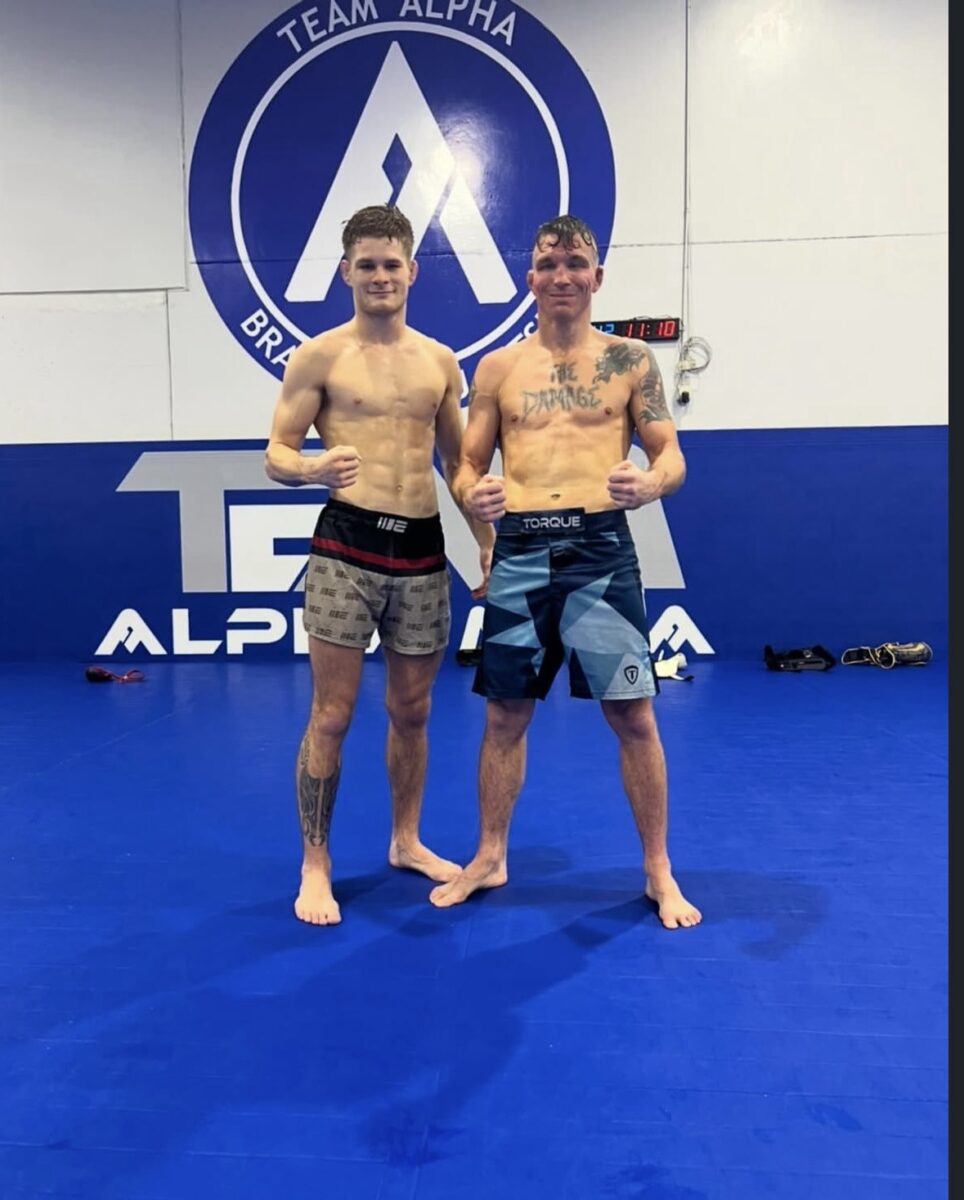
Thomson with UFC Fighter Darren Elkins
Thomson returned to the LFA cage on January 23rd, 2023, over a year from his last fight. Reinvigorated, Thomson secured a unanimous decision victory against the tough Gary Konkol, who had double the professional experience. This was valuable as it showed Isaac had the heart, cardio, and toughness to win over the distance.
Thomson continued his success, winning by TKO for Idaho’s Front Street Fights promotion, before returning to the LFA cage to take on now UFC fighter, Lerryan Douglas. As of the writing of this piece, Thomson is the last man to defeat Douglas as he has since won five consecutive fights by knockout, securing a UFC contract in the process. In their matchup, Thomson utilizes fantastic kicks, landing a left headkick that knocked down Douglas and led to the finish. This is without a doubt the strongest win on Isaac’s resume, and was the perfect showcase of his sky high potential.
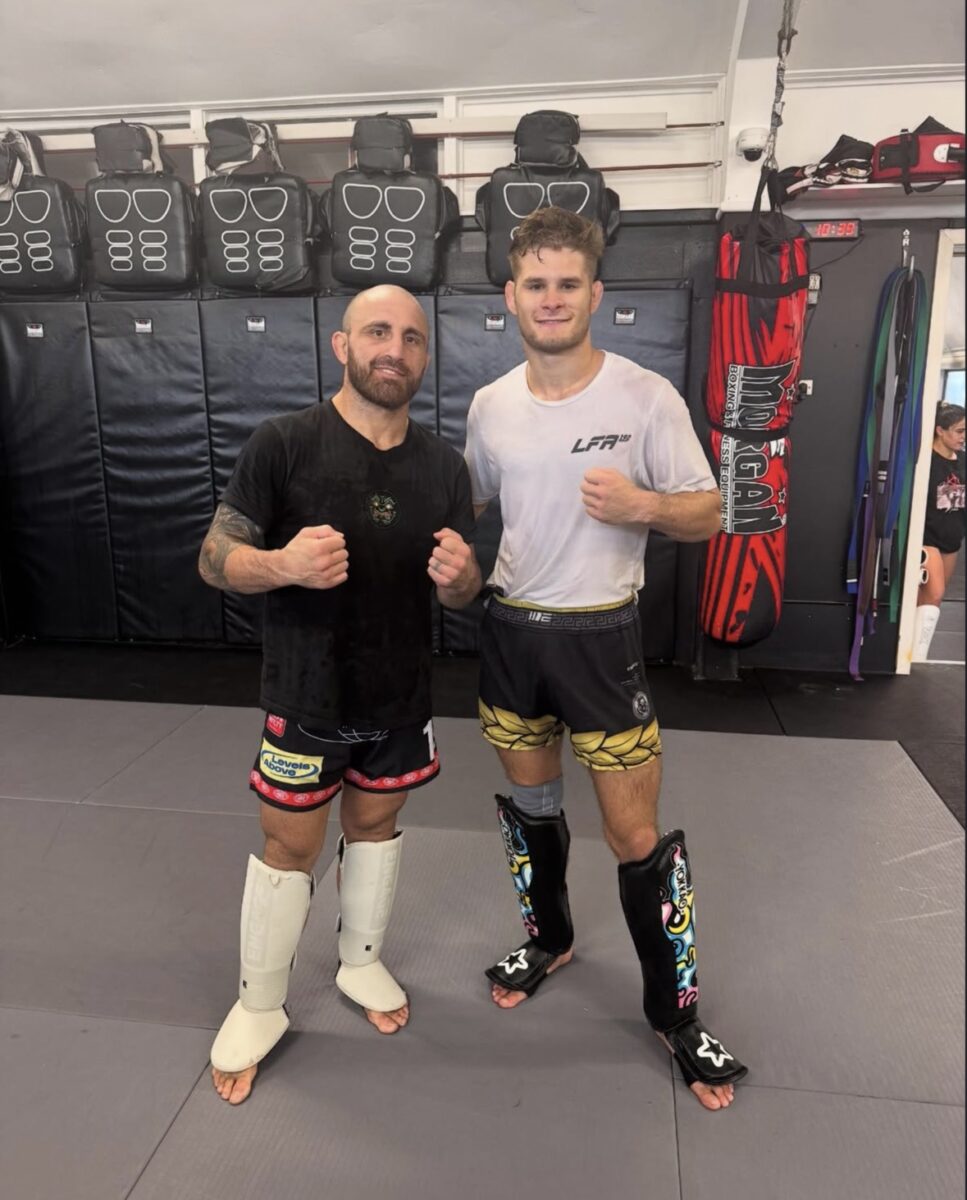
Thomson training with UFC champion and fellow Aussie Alexander Volkanovski
After defeating Colorado scrapper AJ Robb, Thompson faced his second setback as he dropped a split decision to the experienced Shaheen Santana. This time, Isaac shook off the close defeat and got back in the cage just four months later, defeating Israel Delgado by unanimous decision. He followed this by defeating Jeremy Henry at LFA 213, securing the first submission win of his career by rear naked choke in the first round.
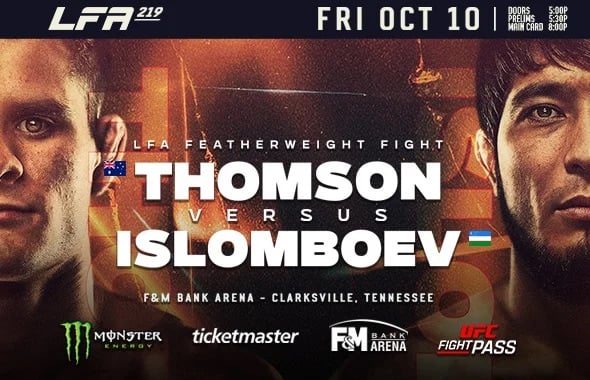
Isaac Thomson’s journey leads us here to his first main event on October 3rd at LFA 219. The 8-2 Thomson will be facing 10-1 Uzbekistani Akbarjon Islomboev, potentially his toughest opponent yet. Headlining a card might be considered a career peak for many fighters, this is certainly not a surprise to Thomson, it is more akin to destiny. Born to be a fighter, this is just yet another milestone marker in the Aussies blossoming career. While the opportunity to become the youngest UFC champion may have passed, there is no doubt Isaac Thomson will be a name we hear for years to come.
Watch LFA 219: Thomson vs Islomboev on Friday, October 10th on UFC Fight Pass.
Slips are often a misunderstood technique since combat sports fans think they are purely defensive and used for evading punches, however there is a lot more nuance and context when using this tool. There are inherent risks and dangers when using any tool in combat sports and slipping is no different. There are two types of slips: rear side slip and the lead side slip. Both types of slips have their dangers and benefits in the open stance match up.
Slipping to the Rear Side
It’s best to look at southpaw vs orthodox match ups to really understand the dangers of slipping in a ruleset that involves kicking. The rear kick from this stance matchup is very effective at punishing the rear side slip.
The importance of the standing leg as mentioned in a previous study:
“Slipping to the rear foot in an open stance matchup is the most risky and most dangerous thing to do. This is because of the position of the standing leg. It only needs a small adjustment in the pocket and has all the space for the rear kick to meet the path of the slip.“
Video 1: Video breakdown of how easy it is to adjust the standing leg at borders in an open stance matchup. Usman reacting to the feinted rear straight by slipping to the rear side cost him here since he’s in the grey area between borders and the pocket.
One of the dangers of open stance matchups is the grey area between the pocket and borders. Open stance matchup are usually a battle of “flint locks” as Jack Slack says. So feints from borders become really convincing because of the small distance needed to cross it. Even high level fighters like Kamaru Usman was slipping a punch he thought was in pocket distance.
Video 2: Belal Muhammad slipping and trying to cross check (dutch block) a kick on the open side. Bringing both hands to block a body kick and slipping at the same time puts Muhammad’s head in the path of Edwards high kick.
This doesn’t mean that slipping to the open side should be avoided all together. There are examples of fighters that successfully slip to the open side and do not get punished for it. But they still follow the rules below: either clinch up or exit the pocket.
Video 3: Valentina Shevchenko dipping to the rear side as Kaytlyn Chookagian tries to set up a high kick. Normally this is dangerous, but in this case Shevchenko punishes Chookagian by crowding then catching her kick.
Video 4: Here’s an example of Jose Aldo doing the “wrong thing” by leaning back into the rear side. He’s able to mitigate the risk by going shoulder to shoulder after Jonathan Martinez shows the rear hand. This closes down the space necessary for Martinez rear kick. Aldo is able to pivot out and exit the pocket safely.
The way to make slips work in a sport that involves kicks:
Understand the stance matchup and where the standing leg of the kick is.
Don’t overuse it.
A general rule to follow is one slip followed by either exiting the pocket or clinching up to prevent further offense from the opponent.
In boxing some fighters can use 2-3 slips, but that is still dangerous since each subsequent slip in the pocket can damage the structure of the stance as well as position of the fighter.
Slipping to the Lead Side
Slipping to the lead side in an open stance matchup is less risky against kicks since the opponent would need to take a full step back in order to make space for their lead leg kick.
One of the best ways to slip to the rear side is what Toki Tamaru does in all his fights; where he slips outside the opponent’s lead foot and drop his level and enter in on a clinch. This removes a lot of the space needed for his opponent to kick him or even punch him.
Video 5: Tamaru doesn’t lean into the open side like wrestle boxers in mma, but instead changes level with his head outside the opponent’s lead shoulder and completely removes the space where his opponent can strike back.
While slipping to the lead side is less risky than slipping the rear side in open stance match ups. Its still dangerous if done at borders. Slipping in any scenario should be used to close down space or create it, but slipping to the lead side can be punished if the weight transition isn’t protected.
Video 6: Buckely uses an outside slip as he goes into the grey area of borders and the pocket. Holland’s jab keeps him in place so all his weight is on the lead foot and cannot move to smoother punches or leave range and gets punished for it.
There is a lot of nuance with slips in rulesets that require kicking. Slips can work in these rulesets, but they must be executed with the understanding of the distance that is being created or being removed.
For more information about slipping in closed stance matchups, please check out the video below:
Ways to Support
Sign up to my Substack for FREE for extra content and updates on what I’m working on.
If you pledge your support for $5 a month or $55 a year, you will get access to a full library of analytical content.
You can also make a one time donation on my Ko-fi for limited access to my Substack.
$5 will get you a month access to my substack, $10 will get you 2 months access to my substack, and so on.
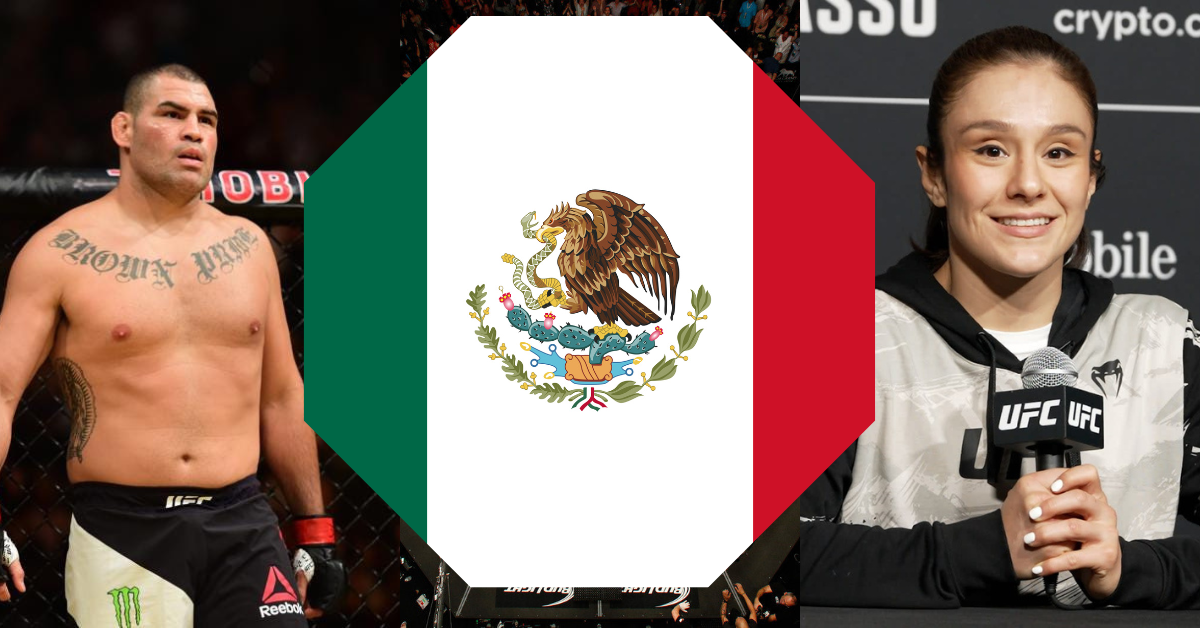
The rise of Mexican talent in the UFC mirrors the country’s long tradition of combat sports and martial arts. From world title reigns to show-stealing performances, these five fighters have shaped the sport and inspired a generation of athletes. Their accomplishments span weight classes and eras, but each has left an indelible mark on the Octagon.
Top Five Best Mexican UFC Fighters in History
5. Diego Lopes
Diego Lopes transitioned from Brazil to Mexico at age 19, where he taught Brazilian jiu-jitsu and competed in local promotions. He captured the LUX Fight League featherweight title with a first-round kneebar, defended it once, and later joined the UFC. Since his debut in May 2023, Lopes has earned three Performance of the Night and three Fight of the Night honors, including a technical knockout over Jean Silva at UFC Fight Night 259. Ranked second in the featherweight division, he also founded a non-profit academy for underprivileged children in Puebla, Mexico, extending his impact beyond competition.
https://www.youtube.com/watch?v=3h6ocoVkp1c
4. Yair Rodríguez
Yair Rodríguez had a journey included the last-second knockout of Chan Sung Jung at UFC Fight Night 139, when a reverse elbow won Performance of the Night honors. Rodríguez’s striking toolkit, featuring unorthodox kicks and spinning attacks, consistently produced highlight clips. His main event run against the champion underlined Mexico’s capacity to compete at the top of lighter divisions.
3. Alexa Grasso
Alexa Grasso made history as the first Mexican woman to claim a UFC title. After challenging for the flyweight belt twice, she secured the championship via rear-naked choke in her third attempt. Grasso’s evolution involved refining her striking against elite opponents and augmenting her ground game under coaches at Jackson-Wink MMA. Her title win marked a key moment for women’s divisions and inspired female athletes in Mexico.
2. Cain Velasquez
Cain Velasquez emerged as the first Mexican-born champion in UFC history with consecutive wins over Brock Lesnar that secured and then reaffirmed the heavyweight title. His victories combined high-volume striking and a wrestling base, forcing opponents into grappling exchanges and punishing ground-and-pound sequences. Velasquez defended the belt twice, submitting Antonio “Bigfoot” Silva and finishing Junior dos Santos by knockout. His training at Jackson-Wink MMA in Albuquerque also helped integrate modern wrestling methods into Mexican fight camps.
1. Brandon Moreno
Brandon Moreno forged his path through the flyweight division, winning the inaugural Ultimate Fighter Latin America tournament before facing long-time champion Deiveson Figueiredo. Their trilogy included a draw, a knockout loss, and ultimately Moreno’s submission victory that made him the first Mexican UFC champion since Velasquez. Moreno defended the belt once, submitting Kai Kara-France, and his 2022 Fighter of the Year recognition underscored his consistency over multiple bouts.
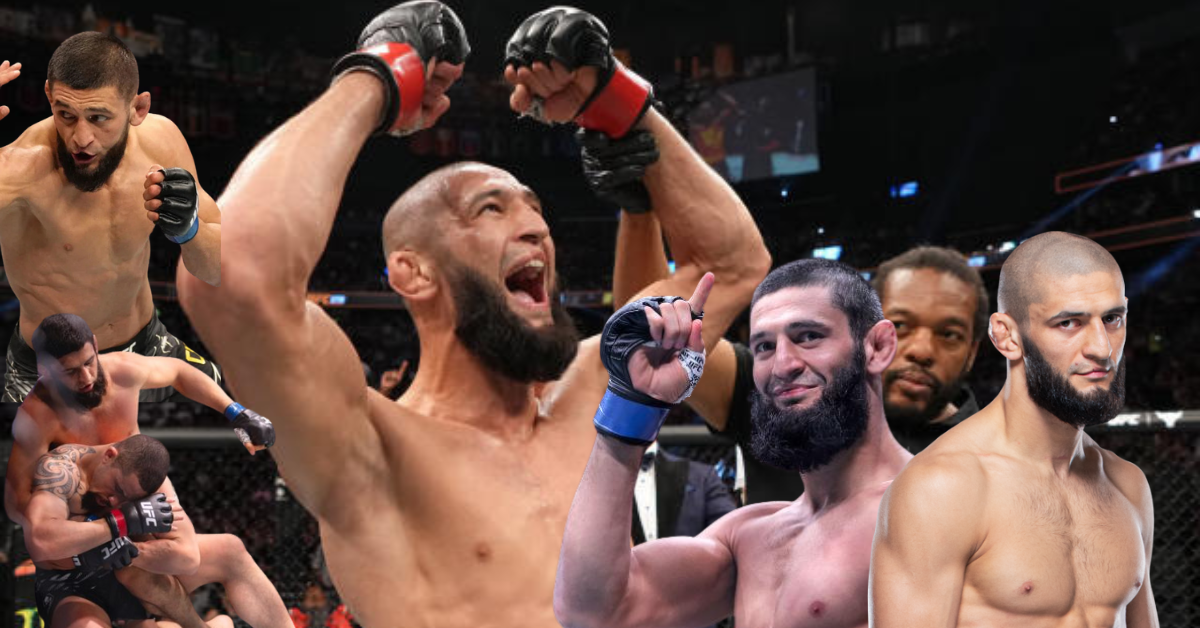
The undefeated Chechen wrecking ball ‘Borz’ Khamzat Chimaev steps into UFC 319 Saturday night with an unblemished record and a reputation for absolute mayhem. Heading into his middleweight title shot against Dricus du Plessis in Chicago, let’s break down the five fights that transformed Khamzat Chimaev from unknown commodity to championship contender.
The Top 5 Khamzat Chimaev Fights in the UFC
5. Khamzat Chimaev vs. Kamaru Usman (UFC 294)
The veteran test that proved Chimaev belonged in title conversations. Taking on former welterweight champion Kamaru Usman on short notice, Chimaev faced his first real adversity inside the octagon. After dominating the opening round with a 10-8 performance that nearly finished “The Nigerian Nightmare,” Chimaev discovered what happens when fights go past the first frame.
Usman rallied hard in rounds two and three, lighting up Chimaev with crisp boxing combinations and proving the hype train could be slowed. Chimaev’s cardio questions emerged as he visibly slowed, but his championship heart answered back. A late takedown in the final round sealed a majority decision victory (29-27, 29-27, 28-28).
This wasn’t the typical Chimaev destruction job. This was a grown man’s fight that showcased both his championship ceiling.
https://www.youtube.com/watch?v=Uxb8YwxRIWk
4. Khamzat Chimaev vs. Kevin Holland (UFC 279)
The submission clinic that reminded everyone why Chimaev is terrifying. After missing weight by eight pounds and causing chaos at the pre-fight press conference, Chimaev had something to prove against BJJ black belt Kevin Holland. He proved it in brutal fashion.
Holland never stood a chance. Chimaev shot for the takedown immediately, and what followed was two minutes of absolute grappling domination. The sequence of scrambles, transitions, and relentless pressure culminated in a D’Arce choke that forced Holland to tap at 2:13 of the first round.
Making a BJJ black belt look like a white belt on the mat is no small feat. Chimaev’s grappling IQ shined as he consistently stayed one step ahead of Holland’s defensive efforts. Weight cutting issues aside, this man remains a problem for anyone in his path.
https://www.youtube.com/watch?v=y0dA0ntUMeg
3. Khamzat Chimaev vs. Li Jingliang (UFC 267)
The comeback fight that included perhaps the most memorable moment in UFC history. After a year away due to COVID-19 complications, Chimaev returned at UFC 267 with something to prove. He proved it by literally carrying Li Jingliang around the octagon like luggage.
The iconic sequence saw Chimaev lift Li off the ground during a takedown attempt, carry him across the cage toward Dana White’s position, and have a casual conversation with the UFC president while holding a grown man in the air. White later revealed Chimaev was shouting things like “I’m going to fight everybody, I’ll fight Brock Lesnar, I don’t care who it is”.
After the theatrical display, Chimaev got back to business, securing a rear-naked choke at 3:16 of the first round. The submission capped a performance that was equal parts dominant and bizarre. Only Chimaev could turn a title elimination fight into performance art.
2. Khamzat Chimaev vs. Robert Whittaker (UFC 308)
The jaw-breaking performance that announced Chimaev as a legitimate title contender. Former middleweight champion Robert Whittaker entered this fight riding momentum from wins over Paulo Costa and Ikram Aliskerov. He left with a broken jaw and three teeth displaced backward into his mouth.
Chimaev needed just 3:34 to secure the face crank submission that left Whittaker tapping frantically. The finish looked like a standard submission until the gruesome aftermath photos revealed the damage: a fractured mandible that required immediate medical attention.
“I felt something was wrong with his chin when I pushed it, so I feel bad for that,” Chimaev said afterward. The performance was clinical, dominant, and frankly uncomfortable to watch. It also erased any doubts about Chimaev’s readiness for a title shot.
https://www.youtube.com/watch?v=DlAuBhsCHyI
1. Khamzat Chimaev vs. Gilbert Burns (UFC 273)
The fight that proved Chimaev was more than hype. Before this encounter, critics questioned whether the undefeated prospect could handle elite competition. Gilbert Burns, a former title challenger with legitimate knockout power, provided the perfect litmus test. What followed was 2022’s Fight of the Year.
The opening round showcased classic Chimaev domination with a picture-perfect jab that dropped Burns. But Burns roared back in the second round, landing bombs that visibly hurt Chimaev and scored his own knockdown. For the first time in his career, Chimaev was in a dogfight.
The final frame became an all-out war. Both men threw everything they had, exchanging heavy shots while their corners screamed instructions. Chimaev’s durability and heart shined as he absorbed punishment and kept marching forward. When the final bell rang, both fighters embraced, knowing they had created something special.
The unanimous decision victory (29-28 across all scorecards) elevated both men. Burns proved he still belonged among the welterweight elite, while Chimaev proved he could win ugly when his usual dominance wasn’t available. The performance answered every question about his championship mettle.
https://www.youtube.com/watch?v=ik3NiJ6lYlw
UFC 319
As Chimaev prepares for his title shot at UFC 319, these five fights tell the story of his progress from destroyer to complete mixed martial artist. The Gerald Meerschaert knockout and early finishes built the hype. The Burns war proved the substance behind it. Saturday night in Chicago, we find out if that substance includes championship gold.
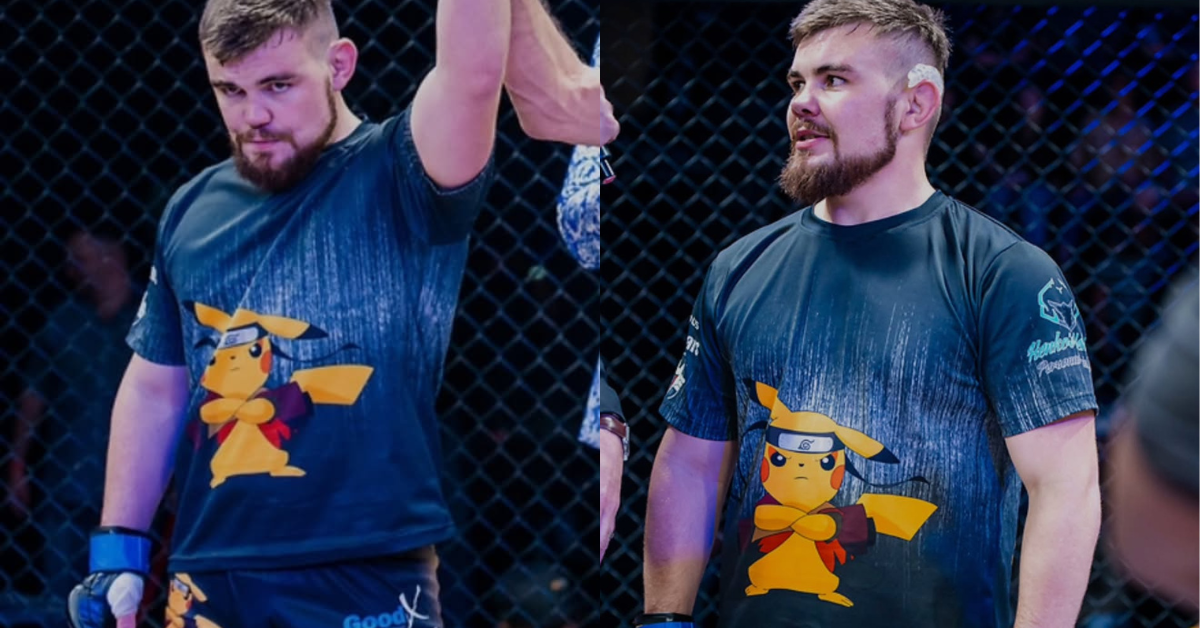
South African mixed martial artist Elbert Lukas Steyn is preparing for one of the biggest moments of his career at PFL Africa 2 in Johannesburg. The undefeated fighter, nicknamed “Pikachu,” has built a reputation for his grappling ability and submission finishes, but his journey to this stage has been far from straightforward.
Elbert Lukas Steyn
Steyn’s entry into combat sports began through wrestling, a path he describes as the toughest discipline he has ever undertaken. “With wrestling, you get your cauliflower ears, your experience, and the most important thing is the discipline that you learn over the years,” Steyn said during an interview with MMA News leading up to the event. His achievements included qualifying for the Youth Olympic Games at 17, but making weight was a major challenge. “I used to cut down to 63kg… that was killer for me at that time.”
His introduction to MMA came almost by accident. Growing up without internet access at home, Steyn happened upon a downloaded George St-Pierre highlight reel on a friend’s hard drive. “When I saw what this guy was doing to people, I just fell in love with it,” he said. The energy of the sport’s crowds, particularly in GSP’s hometown of Montreal, also left a mark. By the age of 15, he was training with an MMA career in mind.
In his amateur years, Steyn struggled with nerves and the pressure of competition. “I hated MMA as an amateur. I feared the cage, I feared the feeling, I feared the pressure,” he said. That led to a six-year break from competition after defending a local amateur belt. He returned to training through wrestling, was offered a fight within two months, and made his professional MMA debut. The shift in mindset was immediate. “The moment I walked out as a pro, I knew this is what I was going to do, before I knew the outcome of the fight.”
A key factor in overcoming those pre-fight anxieties was a change in perspective. “The anxiety I felt doing nothing for those six years was much worse than losing in front of millions of people… or rather be the loser on the screen than the loser watching the screen,” Steyn explained. He learned to manage the adrenaline dump that can sap fighters in competition, describing the challenge as “more mental fatigue than fitness.”
PFL Africa 2 represents both a personal and professional milestone for Steyn. The event is part of the Professional Fighters League’s expansion on the continent, with the Johannesburg card showcasing some of Africa’s top talent in tournament action. Steyn, facing Moroccan opponent Abderrahman Errachidy in a catchweight bout, is eager to make the most of the opportunity.
“From my point of view as a South African fighter, we didn’t really have many mentors from our country to look up to,” he said. “To be part of a platform this big… I’d match PFL with the UFC. The level is there, if not surpassing it.” He sees fighting at home as a chance to inspire the next generation and to perform in front of a local crowd without the prohibitive travel costs that South African fighters often face.
Mark Hulme enters the quarterfinals of the Tipsport Gamechanger Middleweight Tournament this weekend at Oktagon 74 with the intensity and humor that have defined his fighting career. As Hulme faces Czech athlete Dominik Humburger in Prague on August 9, he approaches the contest as the next high-stakes chapter in a journey marked by an unapologetic fighting ethos.
Mark Hulme
The South African welterweight is candid about what draws him to the brutality of MMA and the moments that follow. “A fight is like, obviously there’s consequences,” Mark Hulme says. “Everything I do builds up to that fight. I get to a point where I can’t even listen to people talking sh* because they’re interrupting my time to think about the fight.”
With a string of finishes and several notable submissions, he earned his spot in the quarterfinals after dispatching former Oktagon finalist Andreas Michailidis in under two minutes earlier this year. When asked whether he’s chasing a knockout or a submission against Humburger, Hulme is pragmatic. “I didn’t shoot for no takedown on Andreas. I just did what any sane fighter would do. When he was on his back, I jumped on him and I tried to knock his fucking head off, bro. Pretty much the same for Dominic Humburger.”
The South African’s fighting attitude is a trait that was on full display as he reflected on his celebration rituals in the cage. “Sometimes I just get too affectionate,” he jokes, recalling the post-fight camaraderie. “I’m so overwhelmed with joy that the fight is over that, you know, sometimes I f*ing kiss my opponent. Like, thank you for dancing with me. I understand what your intentions were. My intentions were bad as well, but we’re good now, bro.”
Hulme, who trains alongside UFC star Dricus Du Plessis, routine outside the cage is driven. After landing in Prague, he and his team immediately tracked down a gym and put in a session before settling into their temporary accommodation. “We landed at 8:30, dropped our luggage off at 9, walked 3K to the gym, put in a solid hour, 20, hour 30. Recouped, juices just flowing. Walked back, found a spot to eat, then chilled at the Airbnb. Living a good life, man.”
For Hulme, fighting is stripped of artifice. “People write the sport for the simplicity of it. I’m getting in there to do damage. I almost like it more when there’s no trash talk… I’m honored to fight Dominik Humburger. Anything I’ve said about him is absolutely true, but I’m not gonna – no, I love my opponent.”
As for the lucrative prize money at stake in the Gamechanger tournament? Mark Hulme laughs, “Honestly, I think I might just listen to my girlfriend and the way she advises me. Some of my fantasies include a farm, guns, cattle. Crypto. That’s a lot of power, man.”
Hulme understands the consequences and possibilities that come with every step into the cage. But when asked what fans can expect, he returns to his core: “9th of August. Come watch me. Leave it all in the cage. Above all, f* them, love yourself. Do something you love and make better choices.”
UFC has produced plenty of bad boys who threw hands outside the octagon, but only one fighter masterminded the largest cash heist in British history while still believing he could return for the championship belt. Meet Lee Murray, the most dangerous man Dana White ever signed.
Lightning Lee Murray – The Biggest Gangster in UFC History
“Lightning” Lee Murray makes every other UFC criminal look like shoplifters. The British-Moroccan middleweight didn’t just have anger management issues – he orchestrated a £53 million robbery that reads like a Hollywood script. Born in South London’s Plumstead to a British hairdresser and Moroccan kitchen hand, Murray grew up in the criminal breeding ground of Bermondsey. Murray’s criminal career started before his fighting fame. Expelled from school, he joined the “Buttmarsh boys” gang and racked up convictions for drug possession, assault, and theft.
But these were warmup acts. His UFC debut against Jorge Rivera showcased a triangle choke that took less than two minutes, and he fought three rounds against Anderson Silva.
The Securitas depot robbery proved Murray’s criminal mastermind status. His crew spent months surveilling the facility, using spy cameras, prosthetic disguises, and inside information. They kidnapped the depot manager’s family, forced entry with AK-47s and shotguns, and walked away with £53 million in cash. The operation required military-level planning, complete with a “Stopwatch” member timing the heist like Ocean’s Eleven.
When police raided storage units afterward, they found millions stashed in shipping containers and garage lock-ups. Murray fled to Morocco, where his dual citizenship protected him from UK extradition, though he still received a 25-year sentence. Even from his Moroccan prison cell, he maintains he’ll return to win the UFC championship.
Not Quite, but Close to being a Gangster
Conor McGregor
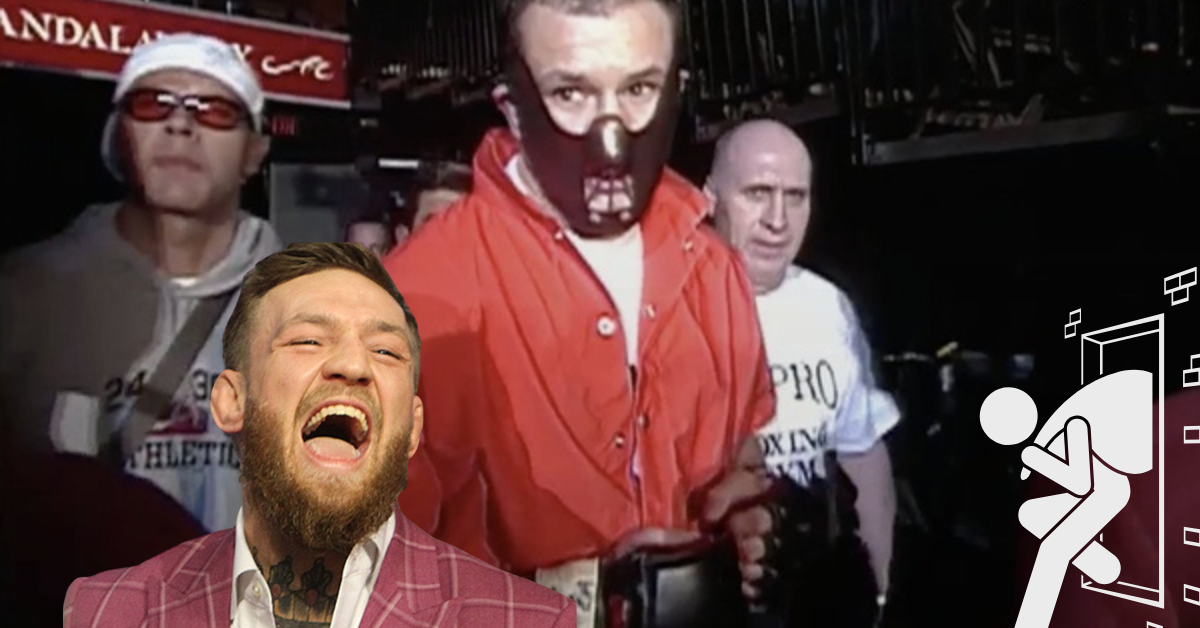
Conor McGregor talks a big game about gangster connections, but his ties to the Kinahan cartel are probably just family drama (maybe). His sister Aoife’s relationship with convicted drug dealer Graham “The Wig” Whelan provides the connection to Daniel Kinahan’s organization. Court documents reveal Kinahan allegedly “leaned on” McGregor to walk a boxer to the ring, but this hardly qualifies as criminal activity. McGregor benefits from cartel protection and attends gangland funerals.
The Kinahan cartel itself is legitimately dangerous, responsible for at least 18 murders and controlling international drug trafficking worth €1 billion. But McGregor remains on the periphery, using connections for business opportunities rather than participating in actual crimes. He’s gangster-adjacent at best.
Enson Inoue
Enson Inoue represents the closest thing to legitimate organized crime ties without crossing into criminality. The Hawaiian-Japanese fighter openly admits “doing business” with Yakuza members while maintaining he was never a member. Joe Rogan describes Inoue as having “run-ins” with the syndicate and offering to help Dana White with “underworld problems.”
Inoue’s Yakuza dealings were business arrangements rather than criminal enterprises. When the crime syndicate asked him to open a Purebred gym in Tokyo, he agreed in exchange for them sponsoring two of his fighters. But when a Yakuza member started neglecting his duties, Inoue took him to a parking lot and beat him for 20 minutes, hospitalizing the gangster. This incident showcased Inoue’s fearlessness but also demonstrated he was never truly part of their organization – he was an outsider they respected.
Amar Suloev
Amar Suloev transformed from legitimate fighter into alleged contract killer, making him potentially more dangerous than the others. After retiring from MMA in 2008, the Armenian joined a private security company where he met Sergei Zirinov, a Russian legislative assemblyman running a criminal organization. The gang allegedly murdered several businessmen and political figures, with Suloev serving as an enforcer and driver.
Prosecutors charged Suloev with attempted assassination of political rivals, claiming he drove during a botched murder attempt. While awaiting trial, he developed stage four stomach cancer and died in 2016 before his case concluded. Unlike Murray’s calculated heists or McGregor’s family connections, Suloev’s alleged crimes involved political assassinations and contract killing – darker territory than robbery or business deals.
Lee Murray stands alone as the biggest gangster in UFC History because he combined criminal mastermind planning with elite fighting skills. While Suloev allegedly became a hitman after retirement and Inoue maintained business relationships with organized crime, only Murray orchestrated one of history’s greatest heists while actively competing at the highest levels of MMA.
Murray’s criminal resume includes the largest cash robbery in British peacetime history, multiple assault convictions, drug dealing, and enough street credibility to knock out Tito Ortiz in a London parking lot. Dana White called him “a scary son of a bitch” and admitted the UFC president was genuinely afraid of him. Even imprisoned in Morocco, Murray continues planning his UFC championship comeback, maintaining the delusion that criminal mastermind skills translate to octagon dominance.
Khamzat Chimaev walking into UFC 319 as the betting favorite against champion Dricus Du Plessis is about as rare as finding someone who thinks Jake Paul deserves a title shot. Champions are supposed to be favorites. That’s literally the point of being champion. But sometimes, the betting world sees things differently.
You remember Jon Jones destroying Shogun Rua at UFC 128? Jones was the challenger but entered as the favorite at around -210. It was one of those moments where everyone collectively decided the old king was done and the new prince was ready to claim his throne. They were right.
But Jones isn’t alone in this exclusive club of challengers who convinced Vegas they were better than the person wearing the belt. Let’s dive into these rare occasions when the betting world basically said “yeah, the champion is nice and all, but have you seen this other guy?”
5 Times Vegas Backed the Challenger Over the UFC Champion
1. Jon Jones vs Shogun Rua (UFC 128)
Odds: Jones -210, Shogun +165
This was peak “passing of the torch” territory. Shogun was coming off a long layoff after knee surgery, while Jones was this freakish athletic specimen destroying everyone in his path. The oddsmakers weren’t being disrespectful – they were being realistic. Jones didn’t just win; he absolutely dominated, making Shogun look like he belonged in a retirement home rather than a cage.
2. Conor McGregor vs Jose Aldo (UFC 194)
Odds: McGregor -140, Aldo +120
Here’s where it gets interesting. Aldo hadn’t lost in a decade, but McGregor’s star power and his interim title win over Chad Mendes had everyone believing the hype train was unstoppable. The betting public bought into McGregor’s mental warfare completely. And then he knocked out Aldo in 13 seconds, making everyone who bet on him feel like geniuses.
3. Valentina Shevchenko vs Nicco Montano (UFC 228)
Odds: Shevchenko -675, Montano +450
Here’s the thing – Shevchenko was the challenger but the massive favorite. Montano was the champion but opened as one of the biggest underdog champions in UFC history. The fight got canceled due to Montano’s weight cut issues, but the odds told the story of how little faith anyone had in the inaugural flyweight champion.
4. Georges St-Pierre vs Matt Serra (UFC 83 Rematch)
Odds: GSP -500, Serra +430
This is the rematch where GSP was the challenger trying to win back his belt. GSP was the massive favorite despite being the challenger because everyone knew Serra’s first win was a fluke. The betting world basically said “yeah, the real champion is getting his belt back now.” They were right.
5. Eddie Alvarez vs Conor McGregor (UFC 205)
Odds: McGregor -150, Alvarez +140
Alvarez was the lightweight champion but an underdog to challenger McGregor. McGregor’s star power and skills had everyone believing he’d become the first simultaneous two-division champion. He knocked out Alvarez in the second round.
Champions become underdogs for several reasons. Sometimes they’re coming off injuries or long layoffs. Sometimes the challenger is just that good. Sometimes the champion is aging and everyone can see the writing on the wall. And sometimes, the betting public gets caught up in hype and momentum.
The fact that you can count these cases on your fingers shows just how rare it is. Champions are champions for a reason, and the betting world usually respects that. When they don’t, it’s because something significant is happening that makes everyone believe we’re about to witness history.
The truth is, these cases are incredibly rare. ESPN found that since 2005, incumbent champions were favored in 85% of their title defenses The beauty of MMA is that anything can happen. Champions can lose on any given night, regardless of what the odds say. But when the betting world actively favors the challenger, it usually means something significant is happening in that division.
Khamzat Chimaev being favored over Dricus Du Plessis is about the collective belief that we might be witnessing another changing of the guard. Chimaev’s undefeated record and dominant performances have the betting world convinced he’s the real champion already. Du Plessis wearing the belt is apparently just a formality that needs correcting. The oddsmakers are basically saying “we’ve seen enough.”
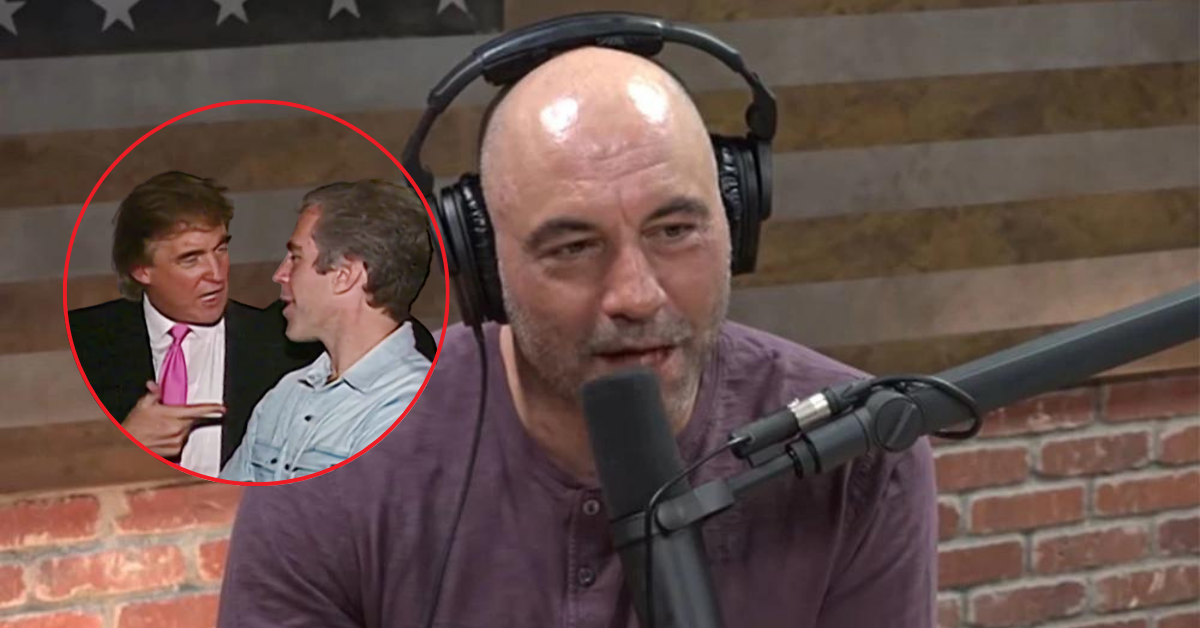
The most‐listened podcast host in the United States, Joe Rogan, has turned sustained attention to the Donald Trump administration’s handling of Jeffrey Epstein-related records. In a recent conversation with former CIA operations officer Mike Baker, Rogan challenged official explanations for Epstein’s 2019 jail death, questioned gaps in newly released surveillance footage, and criticized what he called a pattern of “messaging failures” inside the White House and Donal Trump administration.
Joe Rogan Critisizes Donald Trump’s Handling of Jeffrey Epstein
Rogan’s “The Joe Rogan Experience” averages 11 million listeners per episode on Spotify and reaches millions more through YouTube clip channels and syndicated news coverage. His audience overlaps significantly with the populist‐leaning faction of the president’s voter base, making his statements crucial signals of grassroots discontent.
During episode #2354, Rogan began by calling the entire Epstein case “so crazy” because official sources now insist that “there’s no tapes, there’s no video” despite years of references to large caches of recorded material. He reminded listeners that forensic pathologist Dr. Michael Baden reported Epstein had “three broken bones in his neck, which never happens when you hang yourself,” a detail Rogan believes undermines the government’s suicide finding.
Joe Rogan focused on the surveillance clip released by the Department of Justice on July 5. “They said they have a film… but the film has a [expletive] minute missing from it. Like, do you think we’re babies? What is this?” he asked. Independent forensic analysis published by WIRED later confirmed that nearly three minutes of source footage had been trimmed before release, raising additional questions about the gap. Attorney General Pam Bondi has attributed the jump to a nightly system reset of the jail’s aging recorder, but experts told CBS this explanation is atypical for modern security systems.
Ghislaine Maxwell Interview Questions
Rogan also zeroed in on the DOJ’s decision to interview Ghislaine Maxwell six years after her 2019 arrest. “Nobody from DOJ has ever, according to her legal team, interviewed Gileain Maxwell. This is the first time the DOJ is talking to her, even though she is serving 20 years for sex trafficking,” he said, paraphrasing her attorneys’ complaints. NBC News confirmed that Deputy Attorney General Todd Blanche personally led two days of closed‐door sessions with Maxwell in late July, an unusual step for a senior official. Commentators have noted it is rare for a deputy attorney general to conduct witness interviews directly.
Ghislaine Maxwell, currently serving a 20-year sentence for sex trafficking, has intensified her legal efforts in July 2025. On July 28, her attorneys filed a brief with the Supreme Court arguing that a 2007 non-prosecution agreement with Epstein should have protected her from prosecution. The filing came just three days after Maxwell met with Deputy Attorney General Todd Blanche for what her attorney described as “a very productive day.”
Maxwell’s legal team directly appealed to Trump for clemency, with attorney David Oscar Markus stating: “We are appealing not only to the Supreme Court but to the president himself to recognize how profoundly unjust it is to scapegoat Ghislaine Maxwell for Epstein’s crimes.”
Trump has repeatedly refused to rule out pardoning Maxwell, stating on July 28: “Well, I’m allowed to give her a pardon, but nobody’s approached me with it. Nobody’s asked me about it”. This has drawn criticism from Epstein survivors and some Republican lawmakers, including House Speaker Mike Johnson, who expressed “great pause” about the possibility.
Baker’s Intelligence‐Community Lens
Baker, who spent decades running covert operations, added that Epstein’s properties were likely wired with “pinhole cameras all over; you’d have to gut the walls to remove them,” making it implausible that no incriminating video exists. “The idea that there wasn’t some kind of intelligence agency involved or watching is naive,” he said, arguing that both U.S. and foreign services exploit blackmail when recruiting assets. He cited Russia’s “shotgun approach” of gathering compromising material as a parallel.
Rogan and Baker flagged payments uncovered in earlier Senate inquiries, including Apollo Global co-founder Leon Black’s $158 million in consulting fees to Epstein between 2012 and 2017. Baker called the sums “operationally interesting,” while Rogan suggested they pointed to a sophisticated leverage network rather than legitimate tax advice. Senate Finance Committee Chair Ron Wyden continues to pursue Black for documentation on those transfers.
Political Fallout for the Trump Administration
Rogan’s criticism carries added weight because he endorsed Donald Trump in the 2024 campaign and regularly hosts Trump‐aligned guests. He told listeners that the unresolved questions mark a “line in the sand” for supporters who expected full disclosure. Media outlets from CNN to Yahoo News have highlighted Rogan’s shift as evidence that the Epstein controversy is fracturing parts of the president’s right‐leaning coalition. Joe Rogan was personally thanked during Donald Trumps election victory.
The Epstein files controversy represents the first significant fracture in Trump’s MAGA coalition, with supporters who backed him based on anti-establishment and “drain the swamp” messaging feeling betrayed. The crisis has created an unusual situation where Trump cannot use his typical deflection tactics effectively, as the demands for transparency come from his own base rather than political opponents.
The controversy continues to dominate headlines and has followed Trump internationally, with protesters in Ohio holding “JD Protects Pedophiles” signs during Vice President Vance’s appearances. Despite the mounting pressure, Trump has maintained that the Epstein story is a “hoax” while simultaneously suing media outlets and refusing to definitively rule out a Maxwell pardon.
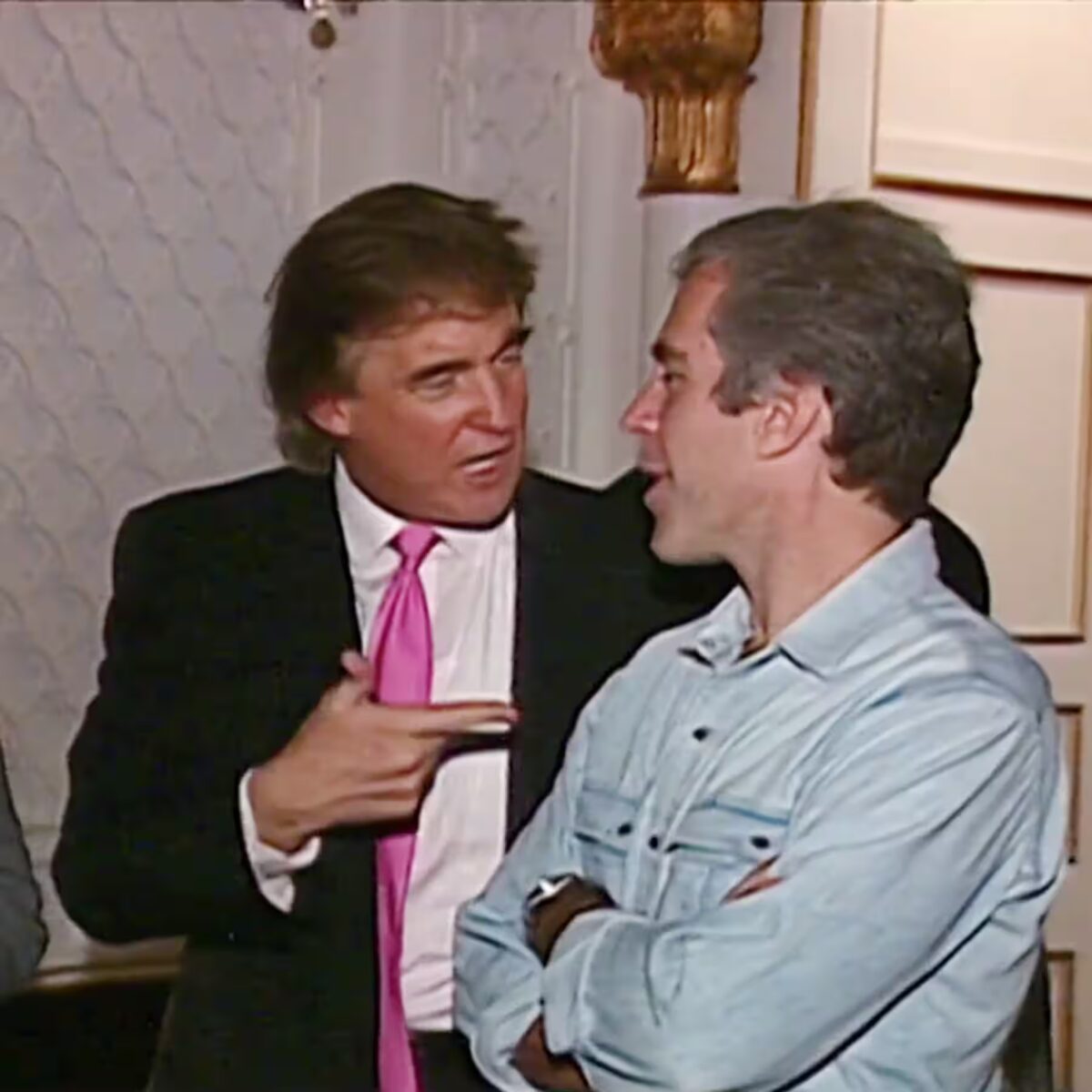
In July 2025, The Wall Street Journal reported that Trump had contributed to a compilation of birthday letters for Epstein’s 50th birthday in 2003, which allegedly included a drawing of a nude woman and the message “Happy Birthday – and may every day be another wonderful secret”. Trump vehemently denied writing the letter, calling it “fake,” and filed a $10 billion lawsuit against the newspaper and owner Rupert Murdoch.
Trump explained his break with Epstein differently than previous accounts, claiming on July 28 that he ended the friendship because Epstein “stole people that worked for me” rather than the previous explanation that he kicked Epstein out of Mar-a-Lago “for being a creep.”
Messaging Missteps
The host faulted the White House for what he called a self-inflicted credibility problem: “If you think you can get away with saying ‘there’s nothing to see here’ after all the hype, you should be fired. The ability to have a self-inflicted wound because of messaging is a hallmark of the Trump administration,” Rogan said. Baker agreed, noting that administration surrogates spent years promising “explosive” evidence only to release a two-page memo stating the case is closed.
Bondi contends the July 8 memo and video were intended to settle speculation. She has reiterated that the DOJ found “no incriminating client list” after reviewing investigative files. On the missing-minute issue, she told reporters the same gap appears in each night’s recording because of an equipment reset. CBS forensic analysts, however, say metadata proves the DOJ video was edited and not truly raw.
The House Oversight Subcommittee has subpoenaed Maxwell to testify remotely on August 11, though her credibility and willingness to answer questions remain uncertain. Meanwhile, legal experts predict continued litigation over public access to grand-jury transcripts and sealed exhibits, even though multiple federal judges have ruled against unsealing them.
Joe Rogan’s ongoing interest ensures the Epstein narrative will persist in conservative media circles, keeping pressure on the administration to clarify inconsistencies.
When it comes to Brazilian Jiu Jitsu credibility, Mackenzie Dern was born for the martial arts. She’s a third-degree black belt, promoted by her father, the inimitable Wellington “Megaton” Dias, himself a revered figure with a coral belt and a choking grip on BJJ history.
Mackenzie Dern’s Brazilian Jiu-Jitsu Credentials
Dern’s lineage runs straight through the Gracie tree: Carlos Gracie – Helio Gracie – Royler Gracie – Wellington Dias – Mackenzie Dern. A very impressive lineage.
Dern’s journey started nearly as soon as she could walk; by age three, she was on the mats, shadowing her dad and stepmom (black belt Luciana Tavares) instead of cartoons. She gained her black belt at age 19, racking up colored belt world titles like they were souvenir tees: IBJJF World Champion at blue, purple, and brown belt – she made it a habit.
“My dad is black belt, Megaton Dias and my stepmom, Luciana Dias is also a black belt in Brazilian Jiu-Jitsu. Fortunately, instead of a babysitter, my dad took me to his academy where he introduced me to Brazilian Jiu-Jitsu when I was 3 years old.” She explained. “My father has been heavily involved in my jiu-jitsu career since I began my training at the age of three. He has taught me almost everything I need to know about how to train and live like an athlete.”
Championships and Accolades
If BJJ had a shopping cart, Dern would need a couple of them. She’s the only woman to snag Gold (as a black belt, mind you) at all five of the high-profile IBJJF Gi Championships: Worlds, Euros, Pan Ams, Brazilian Nationals, and Asian Open. She also holds gold in both the ADCC Submission Wrestling World Championship and IBJJF No-Gi Worlds, making her a unicorn in women’s grappling.
Highlights include:
1st Place ADCC Championship (2015)
1st Place IBJJF Black Belt World Championship (2015)
1st Place IBJJF No-Gi World Championship (2015, Absolute division)
1st Place IBJJF Pan American Championship (2015, 2016)
AJP Abu Dhabi World Pro Champion (2015, 2016)
Let’s not forget the headline-grabbing win over the much-larger Gabi Garcia — a feat rarely accomplished at the top of the sport.
Mackenzie Dern in the UFC
Mackenzie Dern’s transition to MMA had plenty of “BJJ phenom” hype, and the numbers have (mostly) delivered. Making her UFC debut in 2018, Dern was a known finisher – with most of her wins coming via submission, often before her opponent figured out the rules of engagement, Her story wasn’t all slick armbars and smooth transitions: she missed weight more than once early in the UFC, earning some cheeky headlines and forfeiting slices of her purse, but rarely her nerve. She pressed on picking up wins and mastered the weight cut.
In the UFC, she boasts the second-most wins in UFC women’s strawweight division history. Her most recent scrap saw her exact revenge on Amanda Ribas at UFC Fight Night 249, catching a late armbar in a tactical, ground-heavy main event. Not only did this push Dern’s UFC win streak to two and her submission total to double digits, it avenged her earlier decision loss to Ribas in 2019 – always a sweet kind of paperwork.
“I’m drawn towards MMA training now that I am making the transition to fighting, but BJJ will always be my first love. BJJ has given me everything I have in life and I try to represent the sport to the best of my ability.”
It’s rare for an athlete to be a world champion at every BJJ belt, then jump into MMA and break records. Whether it’s the family tree, the hardware, or her mat-smothering style, Mackenzie Dern remains a must-watch in both Jiu Jitsu and MMA.
Who is the greatest sumo wrestler of all time? Japan’s six-tournament calendar has produced many dominant rikishi, but only a handful combined sustained victory, technical range, and cultural impact on a scale that altered the sport’s history. Below is an introductory snapshot list highlighting the achievements that keep these names foremost in record books and public memory. These are the greatest sumo wrestlers of all time.
Hakuho Reigns Supreme Among Modern Competitors
The discussion of sumo’s greatest wrestlers centers on Hakuho Sho, the Mongolian-born champion who retired in 2021 after an unparalleled career. With 45 tournament championships in the top division, Hakuho holds the record for most yusho victories in sumo history. The wrestler achieved the second-longest winning streak in modern sumo with 63 consecutive victories and maintained an 84.6% win rate throughout his career, placing him at the top of modern-era statistics.
Hakuho’s dominance extended beyond championship victories. He holds records for most wins in the top division and most career wins overall, achievements that secured his place as the longest-serving yokozuna in history. His promotion to yokozuna in 2007 at age 22 marked the beginning of a 14-year reign at sumo’s highest rank.
The Great Phoenix Sets the Standard
Before Hakuho’s emergence, Taiho Koki held the championship record with 32 tournament victories between 1960 and 1971. Born Ivan Boryshko on Sakhalin Island to a Ukrainian father and Japanese mother, Taiho became yokozuna at age 21 and dominated sumo’s post-war era. His nickname “Great Phoenix” reflected his graceful yet powerful style, relying more on technique than raw size at approximately 320 pounds.
Taiho’s career featured remarkable consistency, winning at least one championship every year of his top-division career. He achieved six consecutive tournament victories on two separate occasions and recorded 45 straight wins between 1968 and 1969. When Taiho died in 2013, he was widely regarded as the greatest post-war sumo wrestler.
The Wolf Proves Size Isn’t Everything
Chiyonofuji Mitsugu earned the nickname “The Wolf” through his muscular physique. At 271 pounds, he proved that technique and strength could overcome size disadvantage in a sport where opponents often weighed over 300 pounds. His 31 tournament championships rank third all-time, and he set multiple records including 53 consecutive victories in 1988.
The Hokkaido native’s career peaked in his thirties, winning 19 of his 31 titles after age 30. He accumulated over 1,000 career victories during his 21-year professional career, earning entry in the Guinness World Records. Chiyonofuji’s combination of power, technique, and longevity established him as one of sumo’s most complete wrestlers.
The Unbreakable Record Holder
Futabayama Sadaji achieved what many consider sumo’s most untouchable record: 69 consecutive victories from 1936 to 1939. The achievement becomes more remarkable considering Futabayama competed with significant physical handicaps – he was blind in his right eye and missing part of his right little finger from a childhood fishing accident.
The 35th yokozuna entered professional sumo at age 15 and won 12 tournament championships during his career. His winning streak began at sekiwake rank and continued through his promotion to yokozuna, generating such excitement that the Sumo Association extended tournament length from 11 to 15 days. The streak ended when he lost while suffering from dysentery, more due to illness than opponent superiority.
International Pioneers Break Barriers
Akebono Taro made history in 1993 as the first foreign-born wrestler to achieve yokozuna rank. The Hawaiian-born Chad Rowan stood 6 feet 8 inches tall and weighed over 500 pounds at his peak. His promotion broke centuries of tradition and opened doors for future foreign champions.
Akebono won 11 tournament championships during his career and became yokozuna after just 30 tournaments, one of the fastest ascents on record. His rivalry with the Hanada brothers – Takanohana and Wakanohana – helped revitalize sumo’s popularity during the 1990s.
The Competitive Mongolian
Asashoryu Akinori became the first Mongolian yokozuna in 2003 and won 25 tournament championships during his controversial career. In 2005, he achieved the rare feat of winning all six official tournaments in a single year. His aggressive style and frequent conflicts with sumo authorities made him a polarizing figure, but his competitive success was undeniable.
The wrestler’s career ended prematurely in 2010 following allegations of assault, cutting short what could have been an even more impressive championship total. Despite the controversies, Asashoryu’s 25 titles place him fourth on the all-time list.
Historical Legends Without Yokozuna Status
Raiden Tameemon holds the highest winning percentage in sumo history at 96.2%, with a record of 254 wins and only 10 losses. Despite this dominance during the late 18th and early 19th centuries, political reasons prevented his promotion to yokozuna. Standing nearly 6 feet 6 inches tall and weighing 373 pounds by 18th-century standards, Raiden was a physical giant who won 28 unofficial tournament championships.
Modern Era Standouts
Kitanoumi Toshimitsu became the youngest yokozuna in history at age 21 years and 2 months, holding that record until today. The “Hatefully Strong Yokozuna” won 24 championships during the 1970s and remained at yokozuna rank for a record 63 tournaments. Though unpopular with fans due to his dominance and stern demeanor, his consistent excellence established him among sumo’s elite.
Takanohana Koji won 22 championships between 1992 and 2001, ranking sixth all-time. The youngest wrestler to reach the top division at age 17, Takanohana’s rivalry with Akebono drew massive crowds and television audiences during sumo’s 1990s renaissance.
Technical Masters and Style Icons
Wajima Hiroshi remains the only collegiate wrestler to achieve yokozuna rank, earning 14 championship victories and the nickname “Golden Left” for his signature left-handed throws. His unconventional approach included fighting under his real name rather than adopting a traditional ring name, making him unique among yokozuna.
The assessment of sumo’s greatest wrestlers ultimately depends on weighing different achievements across eras. Hakuho’s statistical dominance in the modern era, combined with Taiho’s post-war excellence, Futabayama’s unbreakable streak, and the international barrier-breaking of wrestlers like Akebono, each represents pinnacle achievement in Japan’s ancient sport. These champions transformed sumo through their individual excellence while contributing to the sport’s evolution and global appeal.
Ten All-Time Sumo Greats
Hakuhō Shō – 45 top-division championships, all-time leader in wins and longest yokozuna tenure.
Taihō Kōki – 32 championships, twice completed six straight tournament titles and held the post-war streak record until 2010.
Chiyonofuji Mitsugu – 31 championships, 53-bout winning streak and 1,045 career victories before records fell to later wrestlers.
Futabayama Sadaji – 69 consecutive wins (unbroken record since 1939) and 12 titles during shorter pre-war annual schedule.
Asashōryū Akinori – First Mongolian yokozuna, 25 championships and the lone wrestler to win all six tournaments in one calendar year.
Kitanoumi Toshimitsu – 24 championships, record 63 tournaments at yokozuna and youngest promotion (21) in the pre-Hakuho era.
Takanohana Kōji – 22 championships, cornerstone of 1990s popularity boom and youngest ever makuuchi entrant at 17.
Raiden Tameemon – 96.2% career win rate (254-10), highest documented percentage in top-division history despite never receiving yokozuna rank.
Akebono Tarō – 11 championships, first foreign-born yokozuna and catalyst for the sport’s global appeal in the 1990s.
Wajima Hiroshi – 14 championships, only collegiate yokozuna and fame
Mike Tyson makes history with wins of losses. On February 11, 1990, the boxing world learned a lesson it would never forget: never assume the ending before the bell rings. The stage was set in Tokyo, where Mike Tyson, the undefeated and undisputed heavyweight champion, was expected to breeze through another challenger. Buster Douglas, meanwhile, was cast as the designated fall guy – so much so that Las Vegas bookmakers gave him 42-to-1 odds.
Buster Douglas and Mike Tyson
Some casinos didn’t even bother to take bets on Tyson, figuring it would be easier to sell ice to penguins. Mike Tyson’s reputation at the time was nearly mythic. He had knocked out his first 19 opponents, most of them before the crowd even had time to settle in. The world waited for another quick demolition, and Tyson’s next big payday against Evander Holyfield was already being penciled in.
Douglas, by contrast, was seen as a warm-up act – a solid pro, but not the sort who rewrites history. But boxing, like life, has a way of ignoring the script. Douglas entered the ring carrying the weight of his mother’s recent passing. Some say that loss gave him a new sense of purpose. Whatever the reason, he fought with a determination that surprised everyone – except maybe himself.
The fight itself was a slow burn. Douglas was knocked down in the eighth round but got up, dusted himself off, and went back to work. By the tenth, he had Tyson reeling. A crisp uppercut and a flurry of punches sent the “Baddest Man on the Planet” to the canvas for the first time in his career. Mike Tyson, dazed, fumbled for his mouthpiece as the referee counted him out. The Tokyo Dome crowd of 40,000 sat in stunned silence. Around the world, jaws dropped.Commentators and fans struggled to process what they’d seen.
Image: @netflix/X
HBO’s Jim Lampley, recalling the moment years later, said he delivered the news as plainly as possible: “Mike Tyson has been knocked out.” No need for theatrics – reality had already done the heavy lifting. In an interview with Joe Rogan, Lampley recalled:
“The very first live fight I ever attended was the biggest upset in boxing history. And now here in front of me, 12, 14 feet away, is the result that’s going to supplant that as the biggest upset in boxing history. Mike Tyson has been knocked out. In about that tone of voice. I wanted to make it as matter-of-fact as possible because there was nothing I could do to elevate it by screaming or shouting… It was what it was. Right. Mike Tyson has been knocked out.”
Even Tyson, with the benefit of hindsight, admitted that Douglas was simply better that night and that the loss “made me human.”In the end, Douglas’s victory shook up boxing and the entire sports world.
Sasha Palatnikov sees a lot of big potential bouts for himself under the banner of Dirty Boxing Championship inlcuding against the figurehead of the promotion. Palatnikov did battle with Phile Hawes at DBX 2 on June 14th with the former winning by way of disqualification which led to an expletive laden post-fight speech by Palatnikov. Palatnikov appeared on Bowks Talking Bouts ahead of the DBX 2 contest and when asked if he had any direct experience working with Mike Perry directly with ‘Platinum’ while he was in his DBX promoter role, Palatnikov said,
“No, I’ve never actually. I’ve met Mike Perry a couple times but like the only thing I know, I mean my homie D-Rod [Daniel Rodriguez] beat his ass (laughs) in the UFC. So that was kind of the only interaction that I’ve ever had. But it’s like all respect. But otherwise yeah, like it’s awesome to see him doing what he’s doing and who knows? If he wants to get in there and compete in his own promotion, that’s something that I would definitely be interested in potentially doing down the road. So who knows? Maybe after this fight, there’s some potential opportunities to fight some pretty big big names.”
DBX 2 being tied into Palatnikov’s “number one thing” as a martial artist
When responding to a characterization that this DBX 2 clash represented a good time to be getting aligned with Dirty Boxing Championship with Jon Jones also having a partial ownership stake in the company, Sasha Palatnikov stated,
“Yeah, No. For sure. I mean it is a very new promotion but at the same time like all the, I guess all the, you can say, talking heads that are involved with the promotion seem to be pretty mainstream and people are talking about it. People seem to like the show, like the idea. Yeah, it’s always interesting when a new promotion comes to the front of the combat sport world especially with kind of what’s going on at the moment. Things with GFL didn’t pay off and a lot of fighters were kind of waiting on that including myself.”
“So yeah, it’s good to have more competition, more ability to compete in that space. As for me as one of my goals getting into the combat sports world was I wanted to be able to have the ability to fight in so many different rule sets. As a martial artist that’s like my number one thing is; and this experience. Just having all this experience and going traveling around the world and doing the things that I enjoy doing is part of all of that.”
Palatnikov continued, “Yeah, I think it’s only a good thing because it might; I don’t know, it might not be for you but for my mind, in my point of view like a lot of the things I see going on in the world of MMA, it’s very monopolized. I feel like a lot of guys are missing out on competition in their prime years. So I’m just excited that I’m still considered in stuff like this where I get opportunities to fight.”
Jeremy Kennedy is quite studious of the featherweight MMA scene and offered up recent thoughts on former opponent Aaron Pico’s potential in the UFC as well as Jose Aldo seemingly hanging up the gloves following his previous defeat. Kennedy appeared on MMA Canada and covered several subjects ahead of his rematch against Adam Borics on June 12th in the PFL Smart Cage.
Reflecting on his Bellator 286 first round win over Aaron Pico and touching on what Pico’s ceiling could be in the UFC after relatively recently signing with the MMA powerhouse, Jeremy Kennedy said,
“I think that’s an exciting signing for them, man. He’s a fun fighter, he’s young, got a lot of potential, and just another name to that division, you know. Like right away when they were going to put him with Movsar [Evloev], I thought that’s an exciting fight, you know, that’s cool.”
“Again [Patricio] Pitbull coming in, he’s a little older now and near the end of his career. Could have been cooler a couple years ago but you have Patchy Mix coming over. It’s just kind of cool to see these guys, you know… I just think it’s a good addition to the roster.”
Jeremy Kennedy on Aiemann Zahabi’s Win and Jose Aldo’s Retirement at UFC 315
Jeremy Kennedy also offered up his thoughts on the recent Aiemann Zahabi win in Montreal over Jose Aldo with the former multi-time UFC featherweight champion intimating that he is choosing to hang up the gloves now. When expounding up his viewpoint regarding that notable fight at UFC 315, Kennedy stated,
“Yeah, I mean he looked good. He just kind of; when you fight for that long, you’ve done it, there’s not much more left to do, you know. I think he’s just kind of had it. I thought he won personally. First two rounds were him. He finished horribly of course and that always leaves an impact on the audience and and the judges and whatnot.”
“But yeah, I think he looked good for his age and the mileage on his body. He’s one of the all-time greats at ’45 and ’35, you know, he’s one of the best ever. So he’s still one of my favorites to watch and I just think his time’s done. He’s just; he’s done with the sport. He’s done it all, man.”
When responding to the interesting anecdote about fighters who have beaten Aldo at featherweight including Conor McGregor, Max Holloway, Alexander Volkanovski, and now Zahabi, Kennedy quipped,
“That’s insane. Yeah exactly, like he; man, he’s so good still. Even his losses weren’t very like decisive. Bad losses to [Mario] Bautista and Merab [Dvalishvili] even. He’s good, man.”
Whether you’re looking to dodge bullies, boost your mood, or just get in shape without the gym dread, Brad Pickett’s advice is simple: get moving, have fun, and maybe learn how to throw a punch.
Brad Pickett, the man who made “One Punch” more than just a nickname, has spent years carving out a legacy as both a fighter and a coach in British MMA. From humble beginnings in the boxing ring to the bright lights of the UFC, Pickett’s journey is a masterclass in what happens when grit meets a good left hook. But beyond the knockouts and the trilby hats, Pickett’s real knockout punch might just be his belief in the power of martial arts – not just for building champions, but for shaping better humans.
Brad Pickett
“One Punch” Brad Pickett began his combat sports journey with boxing and found success before before transitioning to MMA in his mid-20s. He rose quickly in the UK scene, capturing the Cage Rage British Featherweight Championship in 2005 and defending it the following year. Pickett’s career expanded internationally when he joined World Extreme Cagefighting, where he earned a notable submission victory and defeated future UFC champion Demetrious Johnson. He went on to compete in the UFC, earning multiple post-fight bonuses and a reputation for exciting fights.
After retiring from active competition, he became Head Trainer and a Director at Great Britain Top Team, where he mentors new fighters and shares his passion for MMA. He is considered a pioneer in British MMA, inspiring a generation of athletes with his work ethic and technical skill.
Exercise Benefits
In an exclusive interview, assisted by NetBet UFC Betting, Brad Pickett emphasized the value of training and physical activity. He said,
“Any form of training or physical activity is always going to be beneficial. Sometimes, if people are out of shape, it can be hard to get started. But if you just bear with it and make yourself a little uncomfortable every day—not so uncomfortable that you want to quit, but just a little—you’ll get into some sort of fitness routine. Once you’re in shape, it’s fine.”
He added that finding an activity you enjoy makes exercise feel less like work and more like learning a new skill. “You’ll focus on learning techniques and skills, and forget you’re getting tired. At the end, you’ll be exhausted, but in a good way.”
Pickett highlighted the practical and psychological benefits of martial arts, he contionued: “Martial arts are a very good life skill to have. It’s not about being the person who goes around fighting. In fact, most of the toughest people you’ll meet who know combat sports are calm and relaxed – they don’t need to fight. There’s no benefit in fighting someone who can’t defend themselves. For people who might be targeted, like the weak or bullied, having martial arts skills is a good deterrent. You don’t see bullies picking on someone who boxes or is a world champion.”
Science supports Brad Pickett’s views on the benefits of exercise. Regular physical activity helps maintain a healthy weight, strengthens the heart, and improves circulation/ It also helps manage blood sugar and insulin levels, lowering the risk of metabolic syndrome and type 2 diabetes.
Exercise also benefits mental health. It releases chemicals in the brain that improve mood and reduce stress, anxiety, and symptoms of depression. Even small increases in activity can have significant effects.
Donald Sanchez is back in his home town ready to sell the joint out as he collides with the number one pound for pound ranked BKFC fighter. Sanchez will look to unseat David Mundell from his middleweight championship throne in the headliner of BKFC 75 on June 6th. When the title challenger was asked on Bare Knuckle Bowker about how much it adds to the fight being on home soil, Sanchez said
“It’s actually pretty stressful fighting in your hometown. People don’t realize that and Dave [Feldman] keeps saying that I only want to fight here. I fight wherever BKFC sends me. So it’s cool. I’ve got tons of support out here. I get the energy from the people but I had to really lock in these last couple weeks and and seclude myself from everybody, you know, last minute ticket buyers and whatnot. So it’s fun. It’s high up here, the altitude, the elevation, and I’m used to it on the daily. So there’s the perks that I get out of this.”
Donald Sanchez and the variable of high altitude familiarity here
While we haven’t really seen gas tank issues with David Mundell per se, Sanchez’s familiarity with the heightened elevation of New Mexico can be a notable variable within this particular fight here. As he expounded upon those dynamics, Sanchez quipped,
“Well we haven’t seen his gas tank because no one’s pressured him. No one’s put him on his feet except maybe like Julian Lane put him on his feet and gave him trouble. But once I’m able to go in there and put the pressure on him and and in the elevation, you know, you’re sucking in less oxygen out here and I really think he’s looking down on that. I don’t think he’s taking it seriously. So we’re about to find out.”
When asked if he thinks ‘Redneck’ is overlooking the altitude component before preparing to defend his BKFC middleweight belt in the coming days, Donald Sanchez stated.
“Well he keeps mentioning that. Pushing to our limits and and that’s all it’s about, you know. So huge credit goes to them but I also have a whole team of coaches and they push me daily. I have straight boxing coaches, I have a an older MMA coach, and it takes a good mixture of everything. So I have the right individuals around me pushing me.”
UFC bantamweight champion Julianna Peña will defend her title against Kayla Harrison at UFC 316, set to take place on July 19, 2025, at T-Mobile Arena in Las Vegas. The fight is one of the most anticipated main events of the year, and the reignign champion is looking to submit her judoka opponent.
UFC 316
Julianna Peña, 35, reclaimed the bantamweight title after defeating Raquel Pennington at UFC 300 in April 2025. Known for her durability, Peña first shocked the MMA world in December 2021 by submitting Amanda Nunes to win the championship. Though she lost the belt in a rematch, Peña has remained a consistent contender and is recognized for her ability to withstand pressure and turn fights in her favor.
Image: Chris Unger/UFC/Zuffa LLC
Kayla Harrison, 34, is making her third UFC appearance after a successful debut against former champion Holly Holm at UFC 300, where she won by submission in the second round. Harrison is a two-time Olympic gold medalist in judo, representing the United States in 2012 and 2016. She transitioned to MMA in 2018, winning two PFL lightweight championships before signing with the UFC. Kayla Harrison is known for her dominant grappling, physical strength, and ability to control opponents on the ground.
Image: @kaylaharrisonofficial/Instagram
Julianna Peña Wants to Submit Kayla Harrison
The US-born Harrison is on the cusp of making combat sport shistory with a win but teh reignign champion Julianna Peña is looking to spoil the party. She wants to best Harrison in her own domain: grappling. Harrison is a life-long judoka but regardless, the current UFC champ beleives she will win via submission. In an interview with Submission Radio, she explained:
“I see this fight going with getting my hand raised. The longer the fight goes on for her, the better for me. I see a submission victory. I see me being able to break her mentally—she’s an emotional fighter—and if I can just tap into making her frustrated, that’s going to be better for me. So, getting my hand raised at any and all costs is how I see this fight going.”
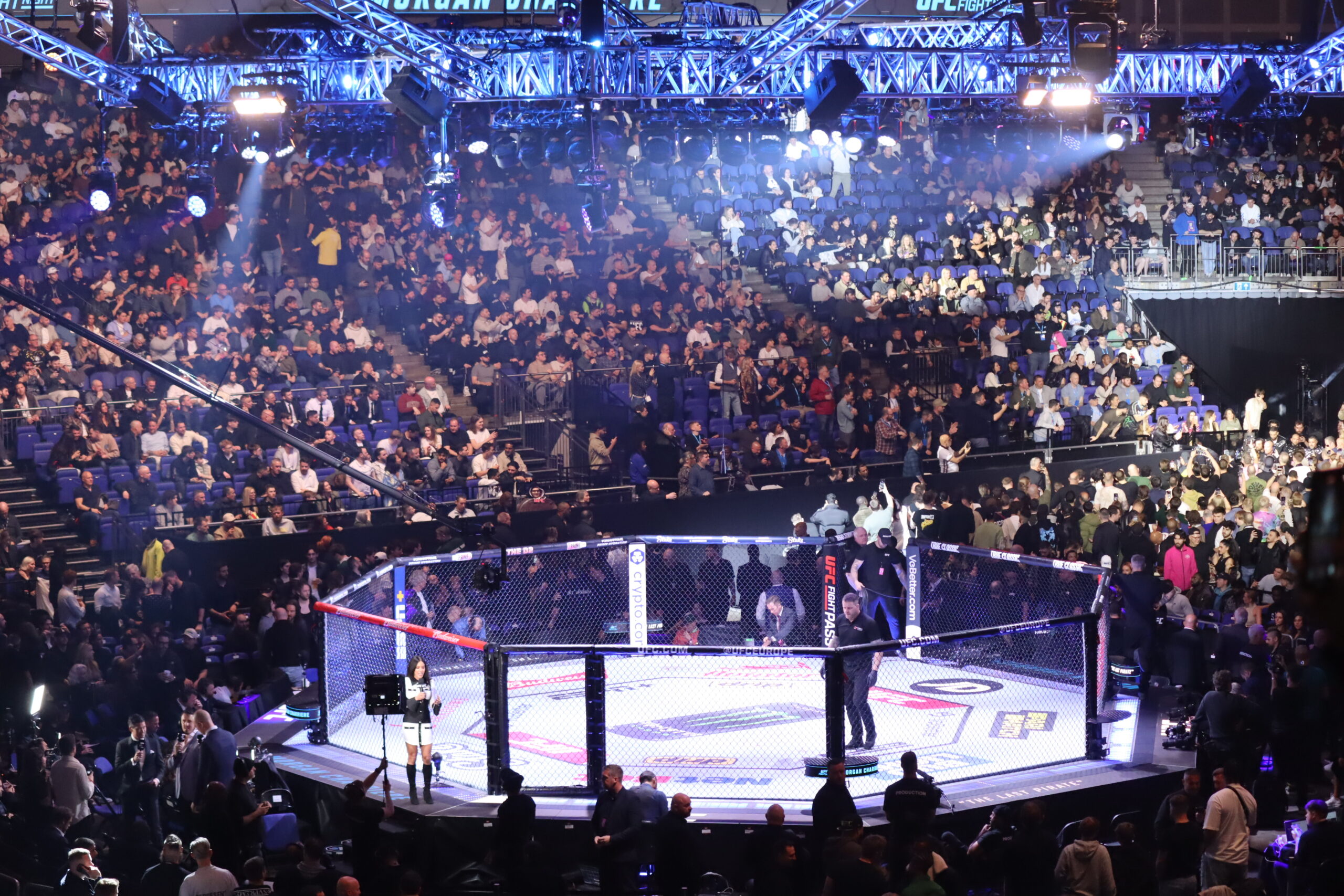
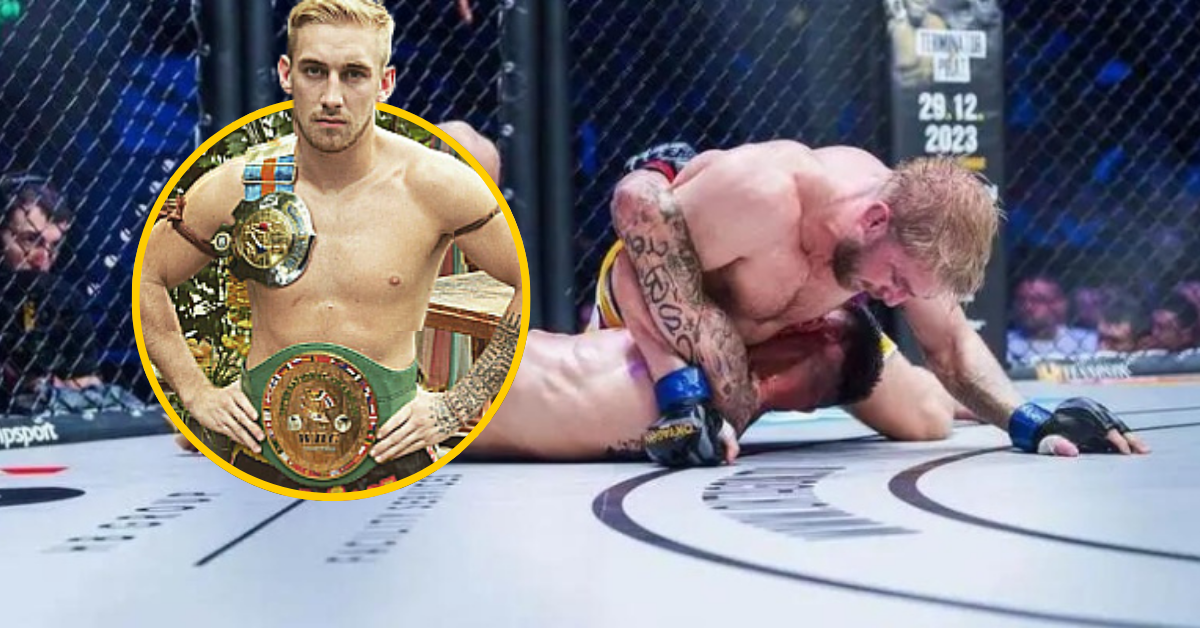
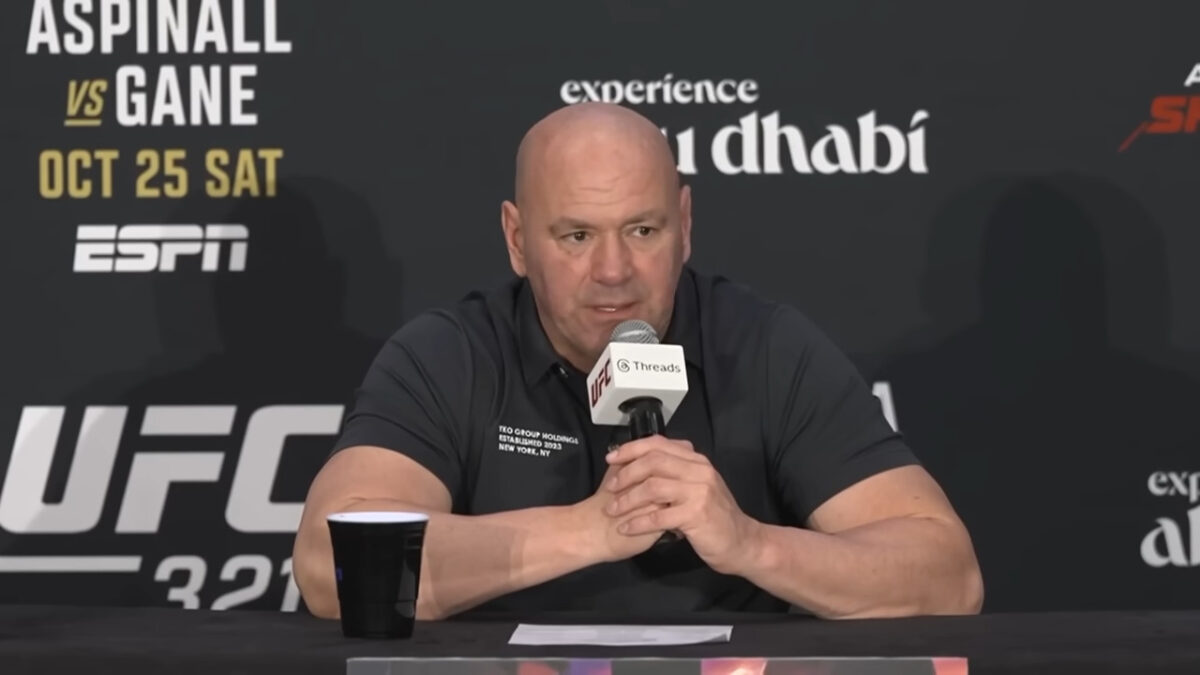
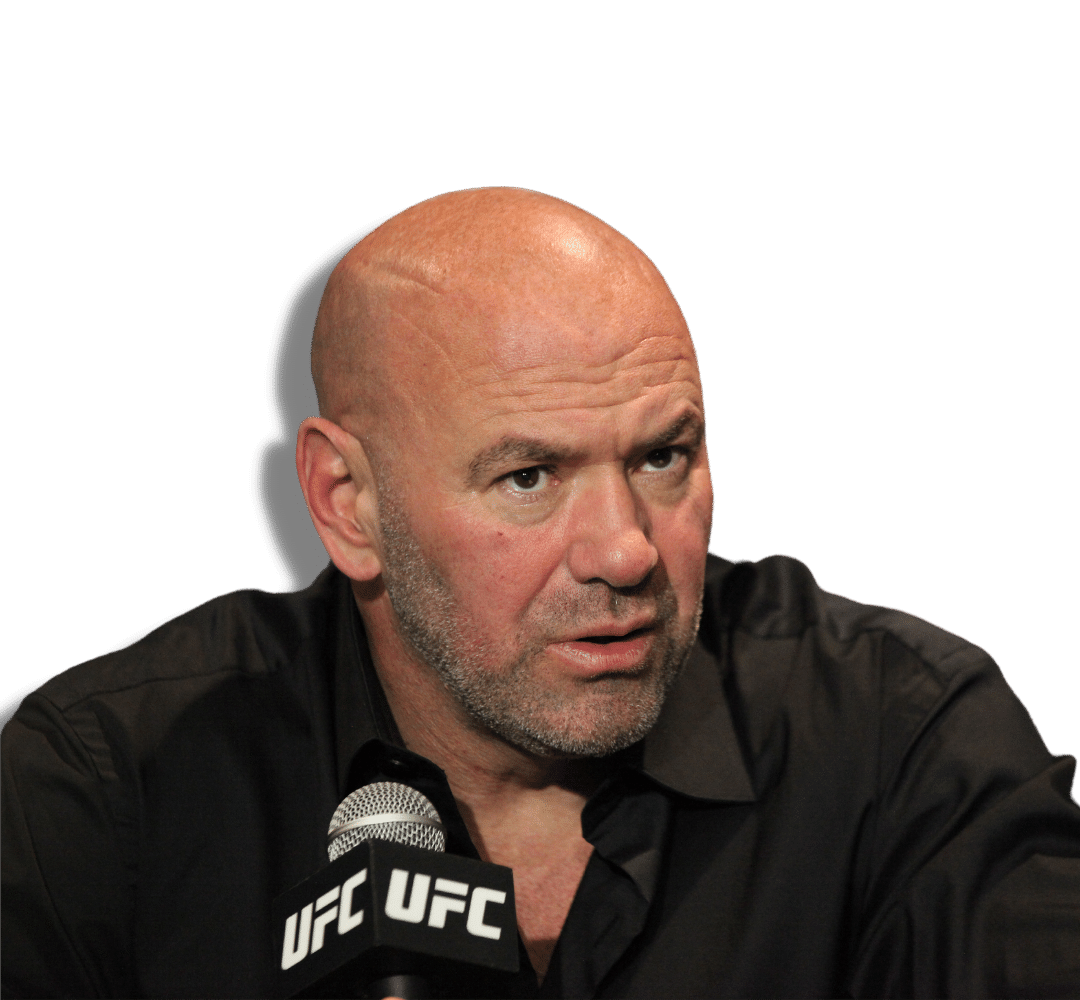
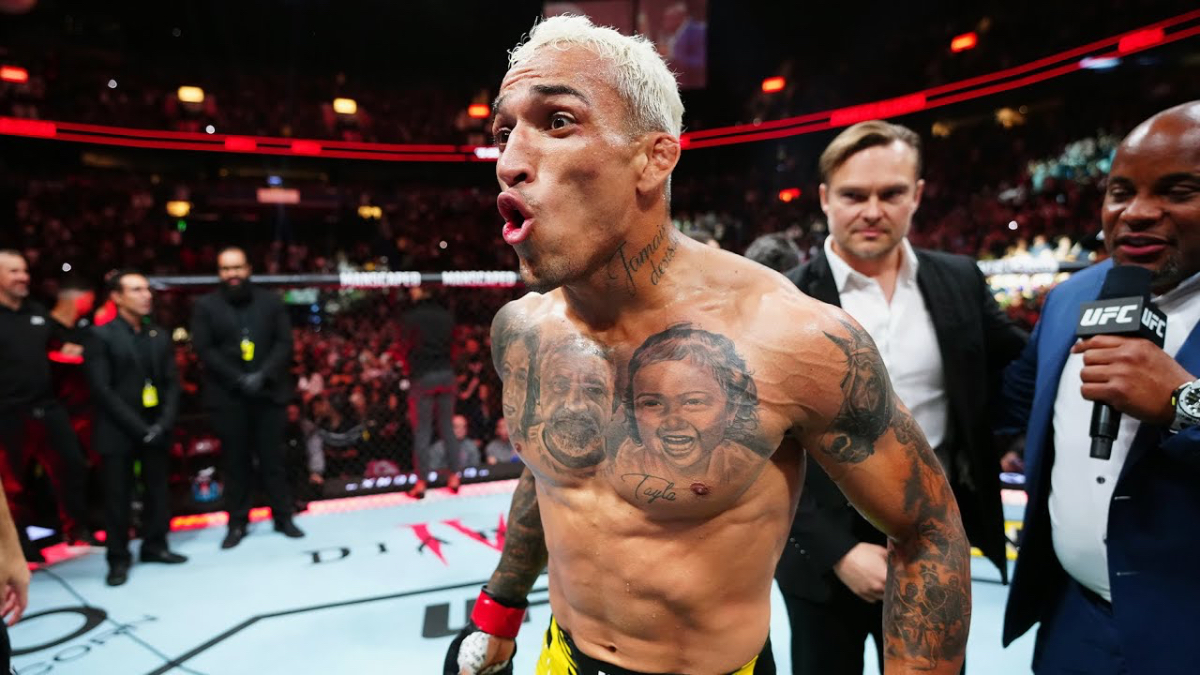
![Tyler Goodjohn: “It’s Going to be Paulie [Malignaggi’s] Last Fight” at BKB 47](https://media.mmanews.com/uploads/2025/10/Tyler-Goodjohn-and-Paulie-Malignaggi.png)